Just weeks after Diane Hathaway started her new job as director of the Goffstown Public Library 25 years ago, a mother destroyed about five of the library’s paperback books by mystery and horror author Christopher Pike. The mother called him a “trash writer,” and called the books inappropriate for teenagers, Hathaway remembers. The mother asked the library to remove them—something Hatahway had never dealt with before.
“It was trial by fire,” she said.
Hathaway has since had three other books challenged during her tenure at the library.
One book, called “Tree Girl” by Ben Mikaelsen, was challenged when a patron claimed it contained pornographic images. Another book, “Jarhead” was challenged by an elderly Marine who “was incensed with how the marines were portrayed,” Hathaway said.
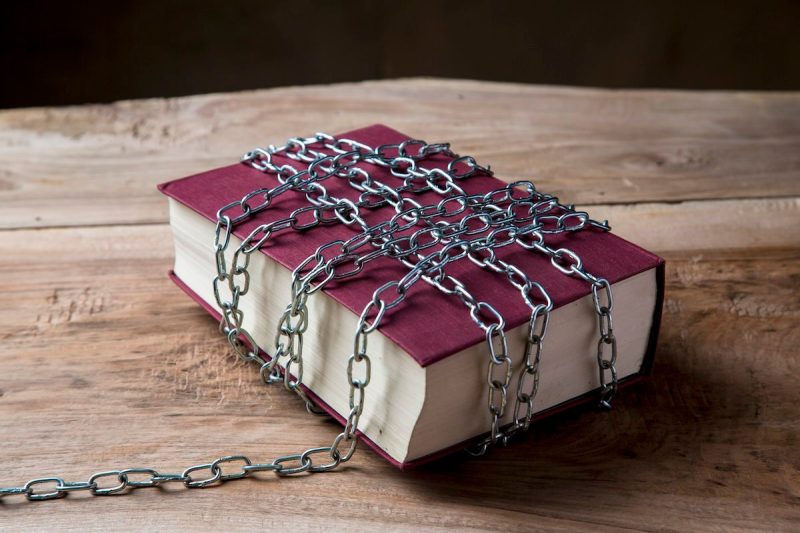
Sept. 22-28 commemorates Banned Books Week, a time to highlight books that have been banned or censored across America. The number of books being targeted have sharply increased. In 2023, the American Library Association’s Office for Intellectual Freedom reported 1,247 censorship efforts—up 65% from the previous year. A total of 4,240 unique titles were banned, and most of them dealt with LGBTQI+ and BIPOC voices.
New Hampshire is no stranger to efforts to dim marginalized voices through book bans. Last year, Hathaway said a parent requested a book about a unicorn be removed because it symbolized the LGBTQ+ population.
“It was a complaint that was made at a school during a class visit,” Hathaway said. “We had to defend ourselves.”
Republicans in the Granite State have tried to create a law to ban books. The New Hampshire House rejected a bill in February that aimed to eliminate books in schools containing sexual content, nudity, and other sensitive material, while also establishing a process for parents to flag and request the removal of these books.
A book ban refers to materials being removed, while a challenge is an attempt to remove or restrict materials. While most challenges are unsuccessful, it’s an emotional topic for Hathaway.
“We live in a society where it should be free to read anything,” Hathaway said. “Everyone has the freedom to read whatever they want and gather information that meets their needs. When we start telling people they can’t read that book, that’s dangerous.”
How Do Books Get Challenged?
The Goffstown Library, like other libraries, has a policy when it comes to removing books from the shelves.
The patron must read, view, or listen to the entire work and fill out an 11-question form. The director then creates a committee including herself, a library board member, and another librarian. The committee reads the book, checks out public reviews of the book, and then issues a written decision to abide by the complaint or deny it within 30 days.
“We’ve never removed something from the library,” Hathaway said. “There’s not a lot to remove, because we’re doing our job by being careful about what we purchase.”
Hathaway said the library’s collection development policy guides them on purchase decisions.
“It’s extremely important that our collection development policy includes a process,” she said. “We’ve updated it recently just because of what we’ve been seeing across the country.”
History of Book Bans
Book banning is not a recent phenomenon. The first recorded book ban in the United States occurred in 1637 in what is now Quincy, Massachusetts. Thomas Morton’s “New English Canaan” was banned by the Puritan government due to its sharp and heretical criticism of Puritan beliefs and authority.
Some of today’s most popular books have faced bans. “Charlotte’s Web,” for example, was banned in Kansas in 1952 after a group of parents argued talking animals were ungodly, while “Harriet the Spy” was challenged in Ohio in 1983 because parents argued it “teaches children to lie, spy, back-talk, and curse.”
What’s different now are the sweeping attempts to censor reading material from marginalized authors. Maya Angelou’s “I Know Why The Caged Bird Sings,” the first of her seven autobiographies, chronicling her life from age 3 to 16, has been banned in Pennsylvania’s Penncrest School District due to concerns about sexual content and an alleged “anti-white” message. Similarly, Leah Johnson’s, “You Should See Me in a Crown” about Liz Lighty, a Black transgender teen striving to win a scholarship through her high school’s prom queen competition, has faced challenges in Oklahoma for containing “obscene material,” according to PEN America.
“What we’re seeing nationwide is that groups are distributing excerpts from books that they don’t agree with, and then people are taking these excerpts and then wanting to challenge them in communities,” Hathaway said.
Banned Books Week
Banned Books Week started in 1982 to raise awareness about the issue. The Portsmouth Public Library, the Goffstown Library, and others, do book displays every year, with explanations about why each are banned.
“We just want to draw attention to the fact that the people do challenge books and the reasons why they are challenged,” Hathaway said.
Hathaway noted that one of the most controversial books on display is the classic children’s book, “Strega Nona” by Tomie dePaola, which often surprises people.
“Most of the feedback is, ‘What do you mean people don’t like ‘Strega Nona?’” Hathaway said. ‘“What’s wrong with it?’”
“Strega Nona” faced bans in several children’s libraries across the United States due to its portrayal of magic, witches, and witchcraft in a positive light. It joins a list of other frequently challenged or banned books with magic themes, like Roald Dahl’s “The Witches,” J.K. Rowling’s “Harry Potter” series, and C.S. Lewis’s “The Lion, the Witch, and the Wardrobe.”
The Bookery in Manchester also has a display for Banned Books Week.
Joanna Flynn, 24, who has been working at the Bookery since January, was putting the display together herself on Wednesday.
“Sometimes reading the reasons the books are banned is fascinating, hilarious, and a little sad,” Flynn said.
One banned book that stands out to her is “The Wonderful Wizard of Oz,” which faced bans due to its perceived “ungodly” influence and its portrayal of women in leadership roles.
“Personally, I think it’s a really great way to point out that literature is powerful,” Flynn said of the display. “What you read really does impact things. When you see things are banned, it makes you question, who is doing the banning? And what do they not want you to think about?”
Flynn admits she finds some books on the display “disturbing,” but said people should be free to read what they choose.
“It’s an option that should be open,” she said. “It does start conversations.”
Major book publishers are pushing back on book bans. Penguin Random House and Simon & Schuster sued Florida last month, arguing that Florida’s law allowing books to be removed violates First Amendment rights to free speech. Florida officials responded to the lawsuit by calling it a “stunt,” and have denied that the state has banned books.
But author Jodi Picoult, who lives in Hanover, New Hampshire, doesn’t find book banning to be a stunt. She has been heavily targeted by book bans, and has been a vocal opponent. Her book, “Nineteen Minutes,” about the aftermath of a school shooting, has been banned in Florida, Georgia, Wisconsin, Wyoming, Virginia, Utah, Texas, South Carolina, Pennsylvania, and Missouri, according to PEN America. About 20 of her books have been banned in total.
Picoult said books are important for people who feel marginalized.
“Books bridge divides between people, and book bans create them,” Picoult said in an interview with CNN last March.
Books Banned or Challenged in NH
One book, “Body Talk: 37 Voices Explore Our Radical Anatomy” by Kelly Jensen, has been officially banned in New Hampshire, according to the American Library Association and PEN America. Many other books have been challenged in the Granite State. They include:
- “Gender Queer: A Memoir” by Maia Kobabe
- “Tricks” by Ellen Hopkins
- “Perfectly Normal” by Robie H. Harris
- “Heartstopper” by Alice Oseman
- “I Am Jazz” by Jessica Herthel
- “Boy Toy” by Barry Lyga
- “Nick and Charlie: A Heartstopper Novella” by Alice Oseman
- “Being You: A First Conversation About Gender” by Megan Madison
- “Heartstopper. Volume 2” by Alice Oseman
- “Born Ready: The True Story of a Boy Named Penelope” by Jodie Patterson
- “Jack (Not Jackie)” by Erica Silverman
- “Grandad’s Pride” by Harry Woodgate
- “You Know, Sex: Bodies, Gender, Puberty and Other Things!” by Cory Silverberg
- “The Bare Naked Book” by Kathy Stinson
- “3 Minutes” by Sarah Pinborough
- “Here and Queer: A Queer Girl’s Guide to Life” by Rowan Ellis
- “I Lived on Butterfly Hill” by Marjorie Agosin
How Can You Help?
The American Library Association has a list of what you can do to help support banned books. Take a look at these other ideas.
Educate Yourself and Others: Learn about the history of book banning. Share information with friends and family about the importance of intellectual freedom.
Read Banned Books: Choose and read books that have been banned or challenged. Discuss these books with others to raise awareness.
Support Your Local Library: Advocate for your local library’s policies on challenged materials. Attend library board meetings and voice your support for free access to information. Donate to your library or volunteer for programs that promote reading and literacy.
Write to Authors: Reach out to banned or challenged authors to express your appreciation for their work and the impact it has had on you.
Get Involved in Your Community: Organize or participate in discussions, book clubs, or events focused on banned books at local schools, libraries, or bookstores.
Promote Censorship Awareness: Write letters to the editor or submit articles to local newspapers advocating for the freedom to read.
Engage on Social Media: Share quotes, information, and discussions about banned books on platforms like Instagram, Twitter, and Facebook to reach a broader audience.
Join Organizations: Become a member of organizations like the American Library Association (ALA) or the Freedom to Read Foundation, which work to protect intellectual freedom.
Support Banned Books Fundraisers: Contribute to campaigns or fundraisers aimed at supporting banned books and freedom of expression initiatives.
Advocate for Legislation: Stay informed about legislative efforts related to censorship and advocate for policies that support intellectual freedom.