This Fourth of July, we’re stepping back in time to imagine what everyday life was actually like in New Hampshire 250 years ago.
English fishermen and traders established the first European settlements at Portsmouth (then called Strawbery Banke) and Dover in 1623.
By 1776, fewer than 90,000 people lived here. Most were farmers, but the colony also relied on fishing, shipbuilding, logging, and trade.
Here’s a glimpse of life in the Granite State back then:
🌲 The forests fueled an empire. New Hampshire’s towering white pines were among its most valuable natural resources. The largest trees were claimed for the British Navy for use as ship masts, while Portsmouth became one of colonial America’s leading shipbuilding centers.
🛶 The Abenaki were slowly kicked out. For thousands of years, the Abenaki hunted, fished, farmed, and traveled New Hampshire’s rivers by birchbark canoe. Despite centuries of displacement, their descendants still live in New England today.
📚 Children worked, too. School usually took place during the winter, when farmwork slowed. The rest of the year, many children helped support their families.
🇺🇸 New Hampshire helped lead the Revolution. In January 1776, the Granite State became the first colony to adopt its own constitution and establish an independent government—months before the Declaration of Independence.
|
Here’s what’s inside today’s newsletter:
|
🕰️ New Hampshire through the centuries
🇺🇸 The New Hampshire firsts that shaped America
|
|
|
🌲 1776: A colony on the brink of independence
Population: Less than 90,000
|
-
Most people lived on small farms or in rural villages.
- Farming, fishing, timber, shipbuilding, and trade powered the economy.
- Portsmouth was the colony’s largest town.
- Homes were heated by fireplaces and lit by candles.
- Travel was by horseback, wagon, or boat.
-
Enslaved people lived and worked in homes, on farms, and in shipyards.
- Voting was limited to white men who were property owners.
-
In 1789, New Hampshire required towns to support public education through local taxes, laying the foundation for the state’s public school system.
|
🏭 1800s: Industry transforms New Hampshire
Population: Around 270,000
|
- Water-powered mills reshaped towns along New Hampshire’s rivers.
- Farmers still made up much of the population, but factory work became increasingly common.
- Canal projects improved transportation before railroads arrived.
-
Stagecoaches connected towns, though travel remained slow.
-
The New Hampshire State House was completed in 1819. It remains the oldest US state capitol where both legislative chambers still meet in their original rooms.
-
The Amoskeag Manufacturing Company opened in Manchester in 1839 and became the largest cotton textile mill in the world.
- Thousands of immigrants came to work in the mills. At its peak, Amoskeag employed workers who spoke 28 different languages.
-
Many workers labored about 84 hours each week.
- Railroads eventually connected nearly every region of the state.
- Grand hotels opened in the White Mountains, attracting wealthy summer tourists.
-
The Mount Washington Cog Railway opened in 1869, carrying visitors to the summit.
- The Civil War ended in 1865.
- The 13th Amendment abolished slavery in 1865.
-
The 15th Amendment protected voting rights regardless of race in 1870, although discrimination remained widespread.
- The Bell Telephone Company was founded, and telephones began entering homes and businesses in 1877.
|
🚗 1900s: Cars, tourism, and technology
Population: Around 444,000
|
-
Cars gradually replaced horses between 1910 and 1919.
- The New Hampshire Electric Cooperative installed its first utility pole in Lempster in 1939, bringing electricity to rural areas.
- Radios brought news and entertainment to most households by 1937.
- Skiing and tourism became major industries in New Hampshire.
-
Women gained the constitutional right to vote with the 19th Amendment in 1920.
-
The Fair Labor Standards Act of 1938 limited child labor and set the minimum working age at 16.
-
The Dartmouth Conference in 1956 coined the term “artificial intelligence.”
- Interstate highways expanded across New Hampshire beginning in the late 1950s.
-
Television ownership exploded after World War II, growing from about 8,000 US households in 1946 to 45.7 million by 1960.
-
The Civil Rights Act (1964) and Voting Rights Act (1965) expanded legal protections against discrimination.
-
The 26th Amendment lowered the voting age from 21 to 18 in 1971.
-
Motorola introduced the world’s first mobile phone in 1973.
-
Jimmy Carter’s surprise performance in the 1976 New Hampshire primary helped propel him to the presidency, cementing New Hampshire’s reputation as a political kingmaker.
- The internet officially launched in 1983.
- Hotmail launched in 1996.
- Wi-Fi became available in 1999.
|
💻 2000s: The digital age
Population: Around 1.4 million
|
- MySpace launched in 2003.
- Facebook launched to the public in 2006.
- Twitter launched in 2006.
- The first iPhone was released in 2007.
- Instagram launched in 2010.
- Facebook acquired Instagram in 2012.
-
The US Supreme Court overturned Roe v. Wade on June 24, 2022, in its Dobbs v. Jackson Women’s Health Organization ruling that the US Constitution does not guarantee a federal right to abortion.
-
ChatGPT launched in 2022.
|
|
|
Tomorrow is the LAST day of our summer drive. And you know what—you all helped us smash our goal!
Any amount you donate today and tomorrow helps set us up well beyond the months ahead. I’m so grateful for this amazing community that continues stepping up for the Granite Post.
Delivering trusted, community-focused journalism is our privilege. Thank you for your continued support.
|
|
|
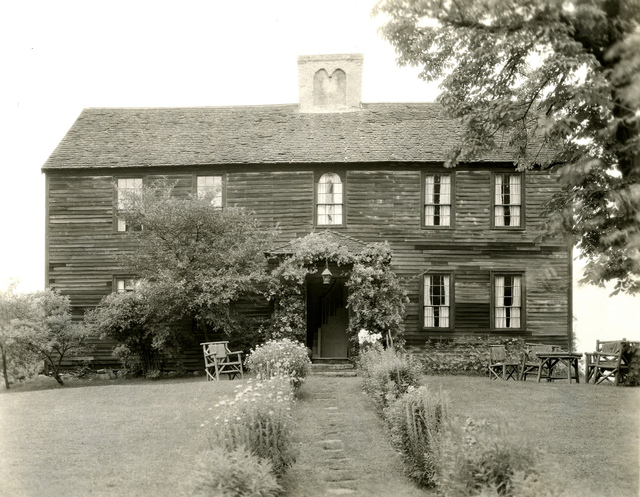
The Colonel Paul Wentworth House, built in 1701, is one of the oldest surviving dwellings in New Hampshire. (The US National Archives)
|
The New Hampshire firsts that shaped America
|
When you think about American history, New Hampshire doesn’t always come to top of mind. But it should. The Granite State helped spark the Revolution, and was the first colony to establish an independent government.
Here’s a look at some of the moments that put New Hampshire on the map:
|
📰 1756-1765: The New Hampshire Gazette stood up to Britain. Founded in Portsmouth on Oct. 7, 1756, The New Hampshire Gazette is one of the nation’s oldest newspapers. Its founder, Daniel Fowle, had previously been jailed for printing anti-British pamphlets. Before the Stamp Act took effect in 1765, the Gazette printed an edition bordered in black to mourn the tax on newspapers and other printed materials—a protest against British rule. Historians now believe much of the paper’s printing was done by Primus Fowle, an enslaved man whose contributions went largely unrecognized for centuries.
🌲 1772: The Pine Tree Riot predates the Boston Tea Party. Settlers in Weare rebelled against British officials enforcing the King’s White Pine laws, which reserved the colony’s tallest white pine trees for the Royal Navy. It became one of the first organized acts of resistance to British rule.
💥 1774: The Revolution may have started in New Hampshire. In December 1774, Patriots raided Fort William and Mary in Portsmouth, capturing gunpowder and cannons months before the battles of Lexington and Concord, which are credited with the start of the Revolution. Some of the weapons were later used at the Battle of Bunker Hill.
🇺🇸 1776: New Hampshire forms the first independent government. On Jan. 5, 1776, it became the first colony to adopt its own constitution, establishing an independent government nearly six months before the Declaration of Independence.
🖋️ 1776: Three Granite Staters sign the Declaration of Independence. Josiah Bartlett, William Whipple, and Matthew Thornton represented New Hampshire.
⭐ 1788: New Hampshire makes the Constitution official. On June 21, 1788, it became the ninth state to ratify the US Constitution—the deciding vote that put the Constitution into effect.
📚 1833: America gets its first tax-supported free public library. Peterborough established the nation’s first publicly funded free library supported by local taxes.
💻 1964: BASIC is born at Dartmouth. Professors John Kemeny and Thomas Kurtz created the BASIC programming language, making computers more accessible to students and helping pave the way for the personal computer revolution.
🗳️ New Hampshire holds the first-in-the-nation primary. Since the early 1900s, New Hampshire has held the nation’s first presidential primary, giving voters an outsized role in shaping presidential elections.
|
|
|
How do you feel about what you’ve been reading here?
|
|
|
Thanks for reading. This newsletter was written by Katy Savage. It was edited by Crystal Niforos.
Granite Post is free for everyone. Your support makes our work possible.
|
|
|
You are receiving this email because you opted in via our website.
Our mailing address is:
Granite Post / COURIER Newsroom
3229 Greenpoint Ave., PMB 532
Long Island City, New York 11101
Want to change how you receive these emails?
You can update your preferences or from this list.
|
|
|
|