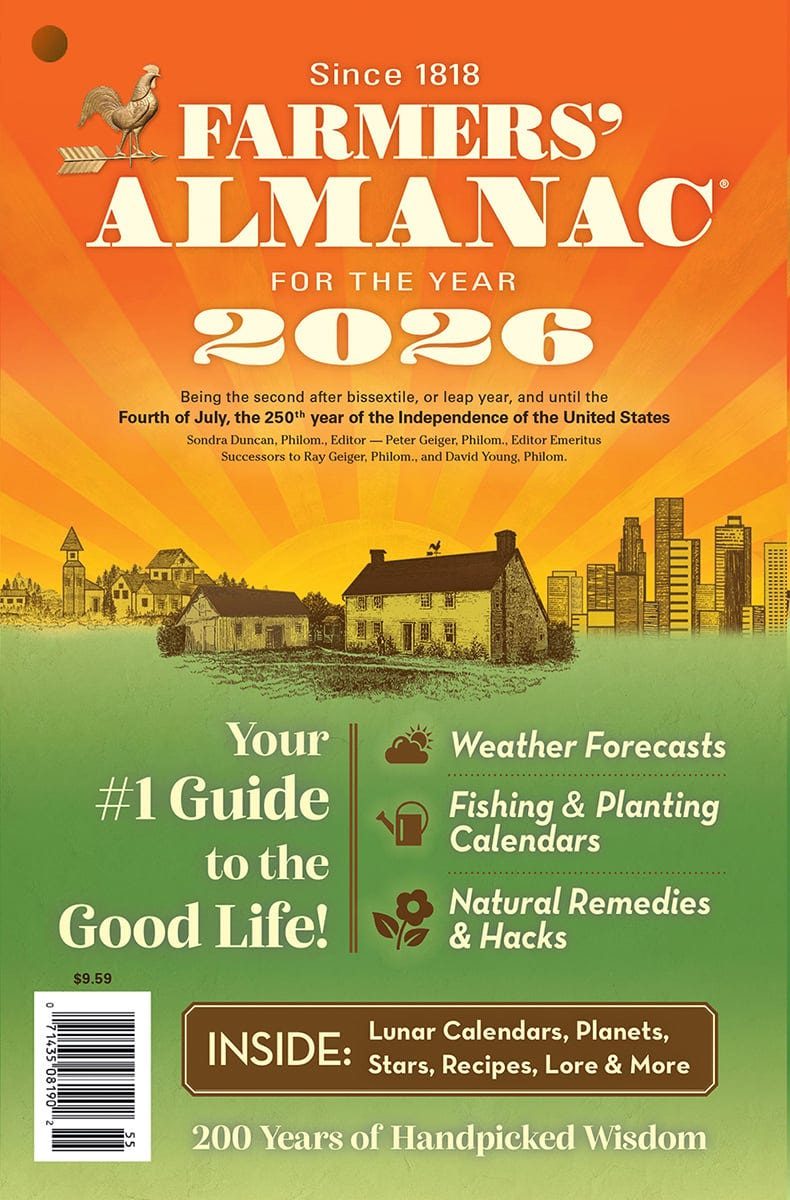
The cover for the 2026 — and final — Farmers' Almanac. Its Maine-based publishers announced Nov. 6, 2025, that this would be the final edition of the almanac, which has published since 1818. USA Today Network
Folksy forecasting will never be the same.
Publishers of the Farmers’ Almanac, an annual publication printed since 1818 that provides practical information for planning the year, including long-range weather forecasts, gardening advice, and astronomical data, announced Nov. 6 that its 2026 edition will be its last.
“After more than 200 years of sharing a unique blend of weather, wit and wisdom, we’ve made the very difficult decision to write the final chapter of this historical publication,” wrote almanac editor and editor emeritus Sandi Duncan and Peter Geiger in a post on the almanac’s website. They cited financial challenges in a “chaotic media environment.”
First published in Morristown, New Jersey, in 1818, the Farmers’ Almanac moved its base to Lewiston, Maine, in 1955, from where it has been published since. Typically coming out in the fall, the publication arose in a time when sophisticated weather forecasting — and even automobiles — didn’t exist.
The almanac was a primary source of long-range weather predictions and agricultural information for farmers for generations, recommending planting times and helping farmers plan their commercial crops and energy usage. Many farmers historically followed the almanac’s advice, which often blended astronomical and folk-based knowledge with planting schedules.
The almanac kept its specific forecasting methods close to the vest, stating on its website that its predictions used methods over the years, including “studying sunspot cycles, solar activity, tidal forces, and even the reversal of winds in the stratosphere over the equator.”
A 2010 University of Illinois study tested the almanac’s long-range forecast for 32 cities across various regions and found the publication’s predictions about 52% accurate — not much better than a coin toss.
But as modern scientific capability made the almanac’s seasonal weather forecasts less necessary, the publication remained beloved for its folksy charm. Duncan and Geiger, in their farewell post, noted readers looked to the almanac for advice on such things as the best days to potty train or wean a baby, or the best time to go fishing.
What’s the Farmers’ Almanac’s final winter prediction for the Great Lakes region? It calls for the winter of 2025-2026 to be a “classic winter wonderland” with cold temperatures lingering well into spring and plenty of snow, including a big snowstorm predicted in the Great Lakes region from Feb. 8-11.
An even older almanac, the New Hampshire-based Old Farmers’ Almanac, publishing since 1792, remains in print.
Duncan and Geiger thanked contributors to and readers of the Farmers’ Almanac over its many years.
“Though the Almanac will no longer be available in print or online, it lives on within you,” they said. “So go ahead — plant your peas when the daffodils bloom. Watch for a red sky at night. Tell the kids how granddad always swore by the Almanac. That’s how our story stays alive.”
The Farmers’ Almanac is available at local supermarkets and pharmacies, and online at farmersalmanac.com through December.
Contact Keith Matheny: [email protected].
This article originally appeared on Detroit Free Press. Reporting by Keith Matheny, Detroit Free Press / Detroit Free Press
Author

The oldest farm in New Hampshire is the second oldest in the country. Here’s where it is
In the middle of New England fall, there's nothing better than heading to a local farm and picking up fresh apples, pumpkins and warm baked goods....

Seacoast restaurants and pantries offer free food amid SNAP crisis
Black Trumpet Restaurant & Bar in Portsmouth is among the Seacoast restaurants stepping up to offer free meals as the US government shutdown has...
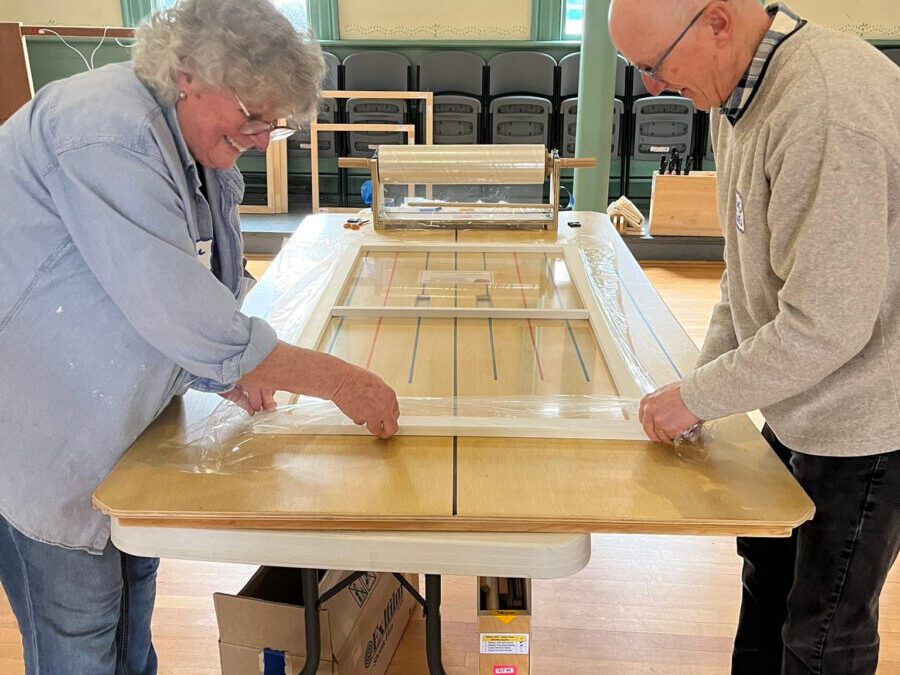
WindowDressers expands in Exeter to help seal out winter drafts: Here’s how to sign up
Looking to make a local impact with her climate-focused work, Stephanie Marshall, a member of Exeter's Energy Committee, discovered...

Aldi is rebranding its products. Here’s what New Hampshire shoppers can expect
Aldi is rolling out changes in its New Hampshire locations. According to a press release, the discount grocery chain will rebrand many of its...

How this Granite Stater is finding the good in New Hampshire—one story at a time
A version of this story appeared in the Granite Post's newsletter. Subscribe here. Last year, Andy DeMeo had no journalism training and no...

Back to Local: Exeter businesses roll out special deals to bring shoppers home
A beloved bowling alley with nearly eight decades of history. A nonprofit helping girls run toward confidence. A downtown bookstore nearing its 35th...