Not only is Amherst’s Ponemah Bog otherworldly, but it’s also a living biome that preserves 12,000 years of environmental history. (Stacy Milbouer)
From ancient henges to primeval forests, New Hampshire has plenty of places that transport you to another world.
New Hampshire is known for its natural beauty, but it’s got so much more to offer. Many spots are not only eye candy but also a passport to a magical place and time. Here are just a half dozen examples.
Merrimack Valley
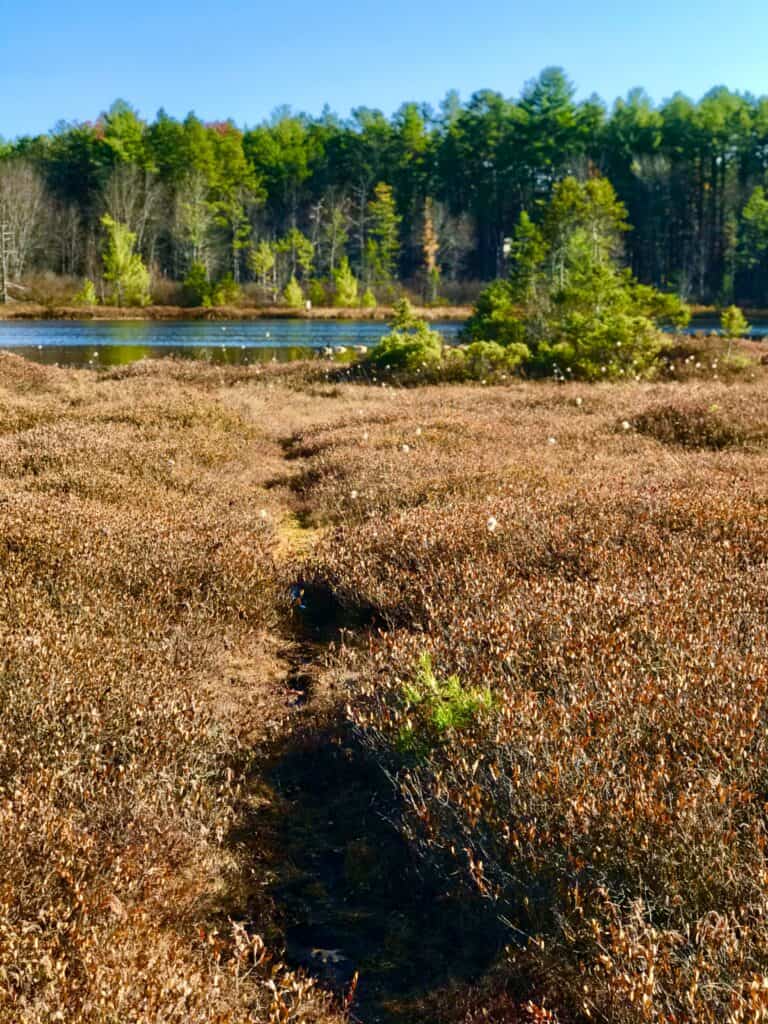
Ponemah Bog Trail—Amherst
Hours: 6 am – 6 pm daily
It doesn’t get more otherworldly than the verdant, floating phenomenon that is Ponemah Bog. In fact, Ponemah (pronounced poe-knee-ma) is a Native American word meaning “the land of the hereafter.” The bog is a suspended mat of moss, sedges, and roots that floats on water and is buoyed by trapped gases. A trip to the bog on 72 acres of wooded land takes you over a carefully placed boardwalk with stops built in for the best views. The circuit is three-quarters of a mile, and takes about 40 minutes to walk. This natural geological occurrence was formed by a receding glacier thousands of years ago. It’s an ever-evolving biome that has documented environmental changes over its 12,000-year history, as evidenced by pollen preserved in its thick peat layers.
There is no other landscape like this in New Hampshire. The bog seems to change every day in every season–shimmering emerald in the spring and summer, gold and red in the fall, and a moonscape appearance in the winter. The bog is home to a wide variety of plants, from familiar pines to more exotic flora such as pitcher plants and sundews, and colorful foliage including leatherleaf, highbush blueberry, and rhodora. And it’s a seductive home for a range of wildlife, including amphibians that breed in the site’s vernal pools in the spring and a wide variety of birds.
New Hampshire Audubon’s description of the sight says it all. “Ponemah Bog is a living museum, a relic habitat for plants far from home and an outdoor classroom for wetland botany and ecology.”
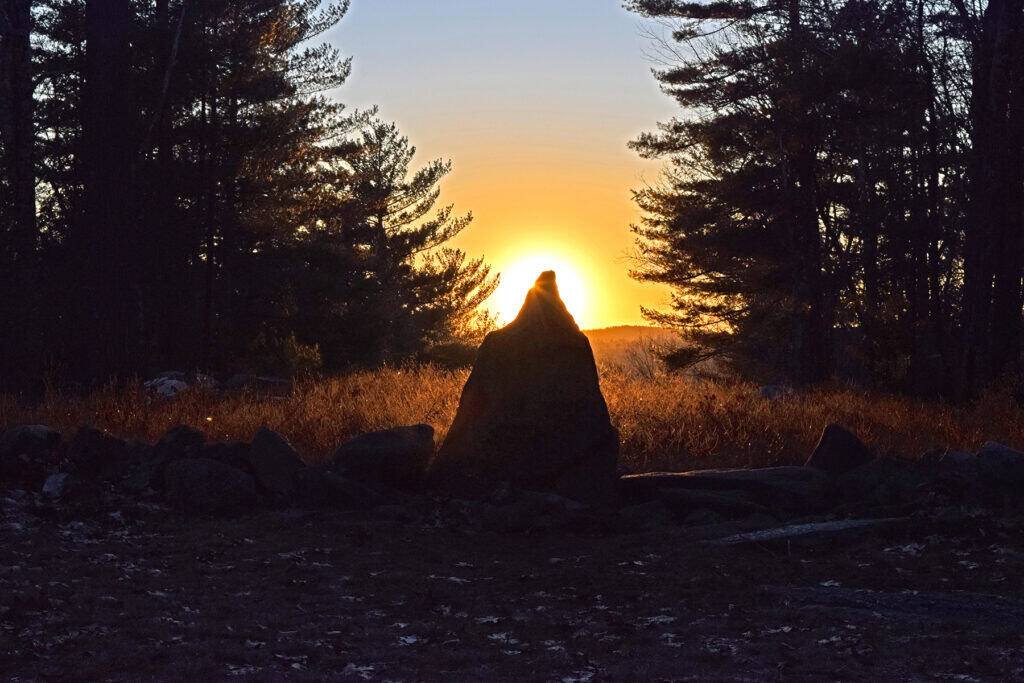
America’s Stonehenge
Location: 105 Haverhill Road, Salem
Hours: Open all year, except Thanksgiving and Christmas, 9 am to 5 pm
Cost: $10-$18. Children 3 and under are free.
Want to get all of the wonder of Stonehenge without needing to renew your passport? New Hampshire has got you covered. Tap into your hidden druid and head to Salem, where a mysterious series of stone structures appears in the woods. Known as America’s Stonehenge, the site attracts tourists and devotees seeking something out of the ordinary, if not mystical. Its origins, much like the more famous British henge, are entirely a mystery, though its structures function as an astronomical calendar, aligning with the sun at the equinoxes and solstices. While some might have questioned the details, the attraction, according to its literature, is a labyrinth of stone walls and chambers that was built “over 4,000 years ago…by ancient people well versed in astronomy and stone construction.”
Maybe even more interesting than the structures themselves is the wealth of fascinating people the site attracts. You can see neo-pagans, druids, and maybe even a tired local mom hoping to distract her kids during spring vacation week. Among the famous patrons of America’s Stonehenge was gothic writer H.P. Lovecraft, whose macabre and fantastical writings feature many fictional New England megaliths. Perhaps he got inspiration standing right here in Southern New Hampshire.
Seacoast
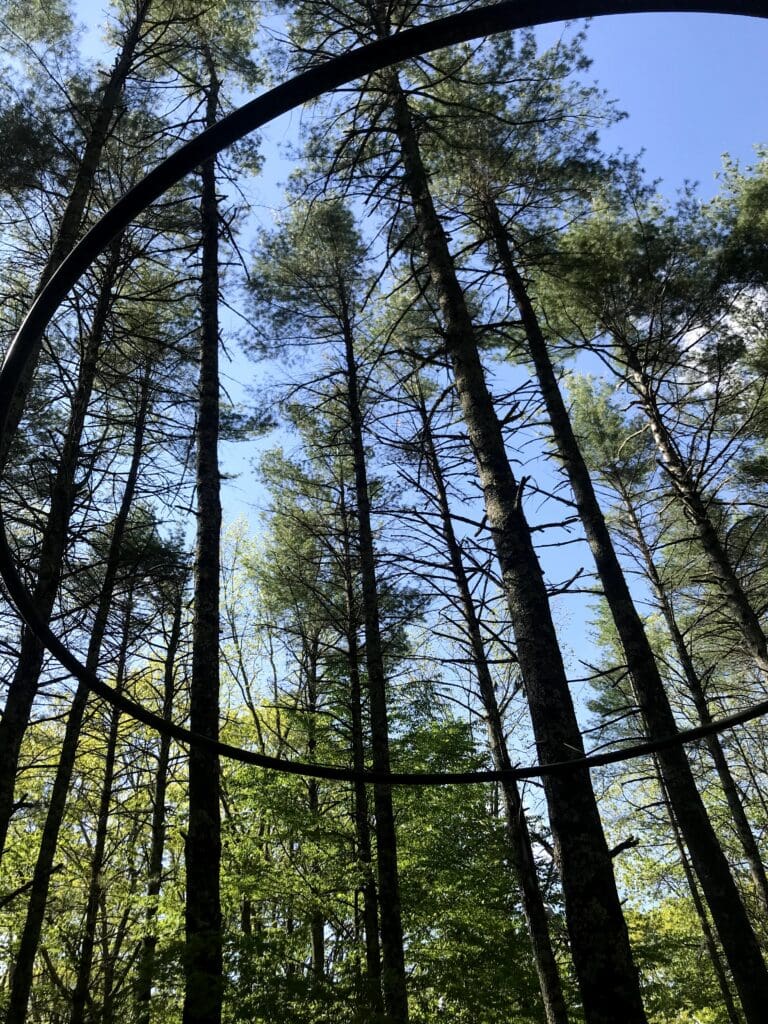
Bedrock Gardens
Location: 19 High Road, Lee
Hours: Open May 13 to Oct. 12, Tuesday through Friday
Cost: Admission is $15 for adults. Children 12 and under are free.
Bedrock Gardens is hard to describe because it’s so magical, whimsical, and meditative. This 30-acre nonprofit public garden, which started life as a dairy farm in the 18th century, is home to fanciful outdoor sculpture, highly designed landscapes, and leisurely walks on enchanted-looking paths, through woods and fields where flora like white snakeroot, purple spilt milk bush, clover, and white frostweed spring up from the ground and tall trees take on the characteristics of fairies and other beings. Look up, down, and around—surprises are everywhere, including an enchanted outdoor bedroom, a footpath labyrinth with golden rings suspended overhead, a three-quarter-acre “grass painting,” a Japanese tea house, climbing arbors, lily-pad-strewn streams, and even the occasional visitor dressed up like a sprite. This place is not just a public garden. It’s an exquisite respite from the noise and nonsense of everyday life.
Bedrock Gardens, which opened to the public six years ago, is the brainchild of sculptor/landscape designer Jill Nooney and her husband, Bob Munger, a sculptor, gardener, designer, and retired doctor. Nooney is also the author of “The Making of a Public Garden,” published in 2024.
Lakes Region
The Madison Boulder
Location: Madison Boulder Natural Area, 473 Boulder Road, Madison
Hours: Always open
Cost: Free
Nothing quite screams “otherworldly” like feeling small and insignificant in a universe much larger than yours. Enter the Madison Boulder, an absolutely massive granite rock, the largest known glacial erratic in North America and one of the largest in the world, according to the state Department of Natural and Cultural Resources. A glacial erratic is a boulder that ice sheets moved a distance from its formation site thousands of years ago. The Madison Boulder weighs 5,000 tons, is 23 feet tall (though there’s an additional 12 feet or so extending under the ground), 83 feet across, and 37 feet wide. Until the early 1800s, scientists believed that free-standing giant boulders, like Madison, were washed up on land during ancient catastrophic floods, rather than, as is now accepted, moved over long distances during the last ice age.
The Madison Boulder hitched a ride on a receding glacier about 14,000 years ago, moving it from two miles away, which is now the town of Conway, to its current location, according to the New Hampshire Division of Parks and Recreation. A TripAdvisor reviewer called the boulder, “one of those odd, fascinating, natural attractions that you will be happy to say you stopped and took it in.”
Monadnock Region
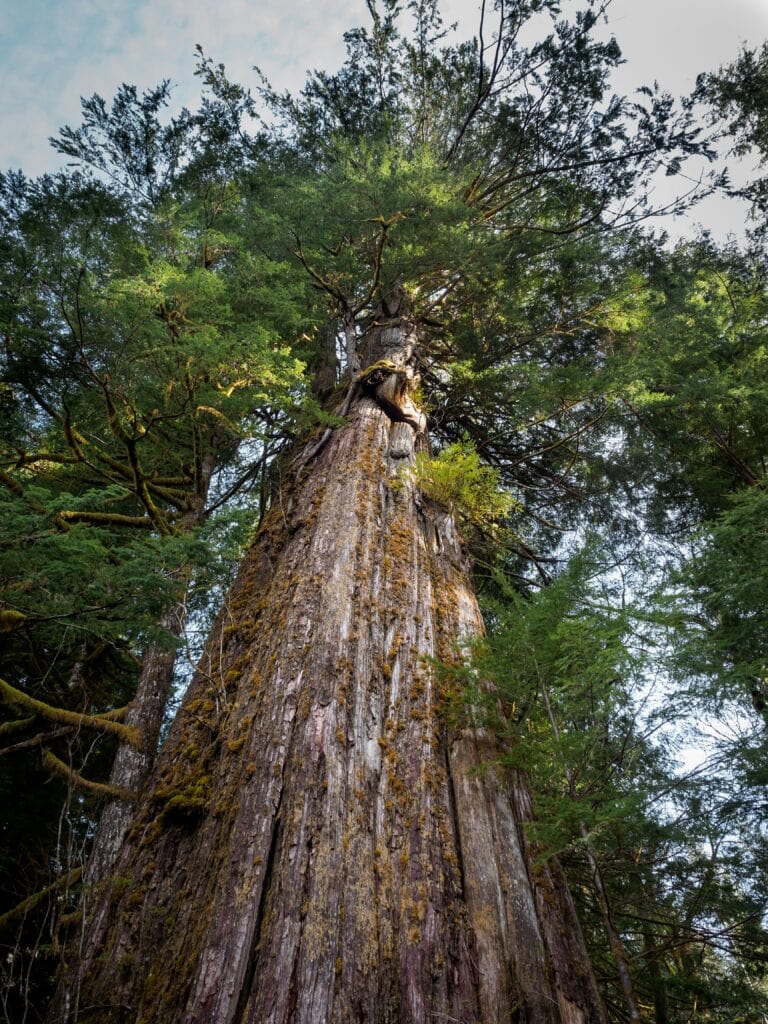
Sheldrick Forest
Location: Sheldrick Forest Preserve, Town Farm Road, Wilton
Cost: Free and open to the public
Before Europeans settled New Hampshire, there were thriving old-growth forests with massive trees that reminded early colonists of entering a cathedral. The nascent nation’s demand for lumber to be used for heating and construction was voracious, and most of the state’s old-growth forests disappeared.
The 227-acre Sheldrick Forest escaped the devastation and is one of the rare places where you can still visit a primeval environment and hug a tree that is over 200 years old. There are white pines, standing at 150 feet tall, massive hemlocks, oak trees, and a cedar swamp crossed by a boardwalk. The property was preserved from development by the Nature Conservancy in 1996. You can visit the forest anytime and take in the beauty of the magnificent canopy and the flora and fauna that dwell there. You can see and smell mountain laurel in the spring and get glimpses of barred owls, scarlet tanagers, deer, fox, and bobcats throughout the year.
Dartmouth-Sunapee Region
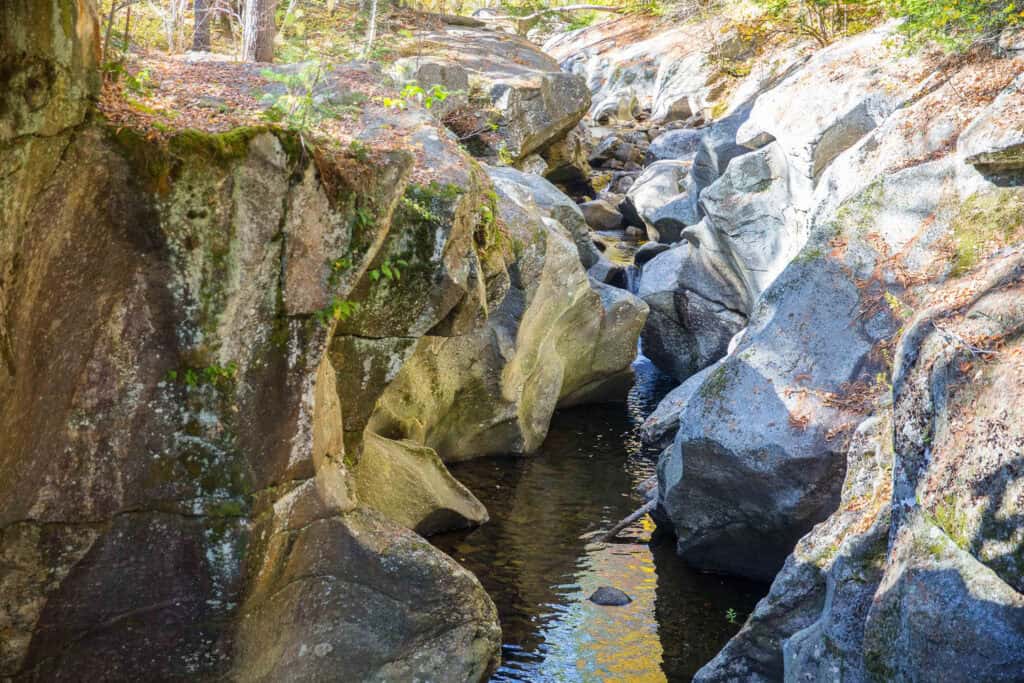
Sculptured Rocks Natural Area
Location: 251 Sculptured Rocks Road, Groton
Cost: Free and open all year, but not staffed during the off-season.
Sculptured Rocks Natural Area is a portal back to the Neolithic period, 12,000 years ago, when the last Ice Age retreated. Grains of sand in the meltwater of a mile-deep glacier that covered the Grantie State carved out a canyon where the Cockermouth River thunders through a 30-foot-deep gorge on its way to Newfound Lake. The smooth-as-marble walls of the canyon look like frozen waves above the waterfalls and potholes the glacier left behind. Hearty swimmers brave the frigid water in the summer while sunbathers enjoy the cooling mist that hangs there.
Author


We asked, you answered: Who should be president in 2028?
A version of this story appeared in the Granite Post's newsletter. Subscribe here. The 2028 presidential race may feel far off, but early polls are...
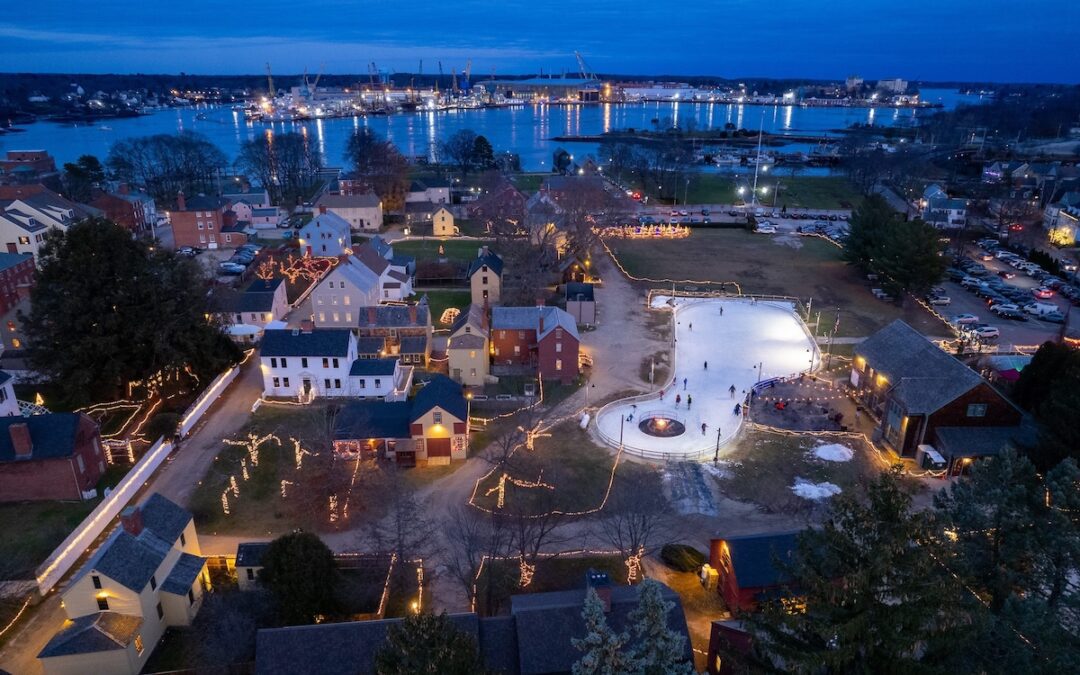
How early is too early to put up Christmas lights? What New Hampshire laws say
Halloween has come and gone – so is it time to put up the Christmas lights? Every year, debate swirls over how early people can start putting up...
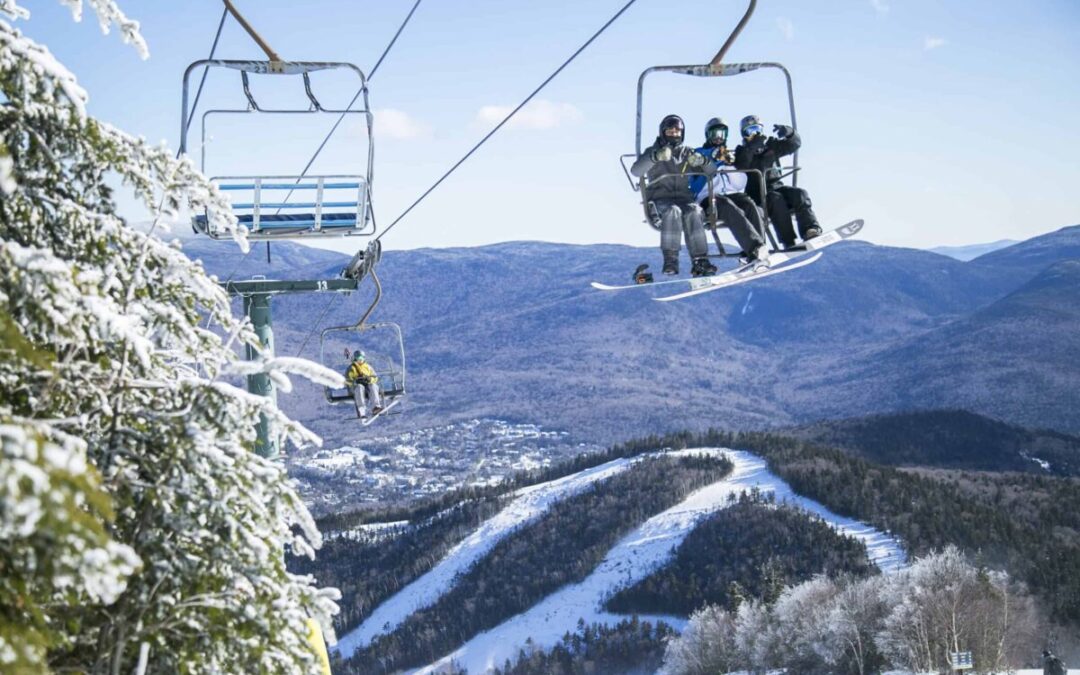
All the ski resorts in New Hampshire + their projected opening dates
Ready to hit the slopes? Discover when all of New Hampshire’s ski resorts open up for the 2025-2026 season. New Hampshire is home to numerous ski...

Bestselling cars in New Hampshire
As luxury-brand vehicles continue to swell the market, the average price for a new car in the U.S. has modestly declined, signaling an increased...
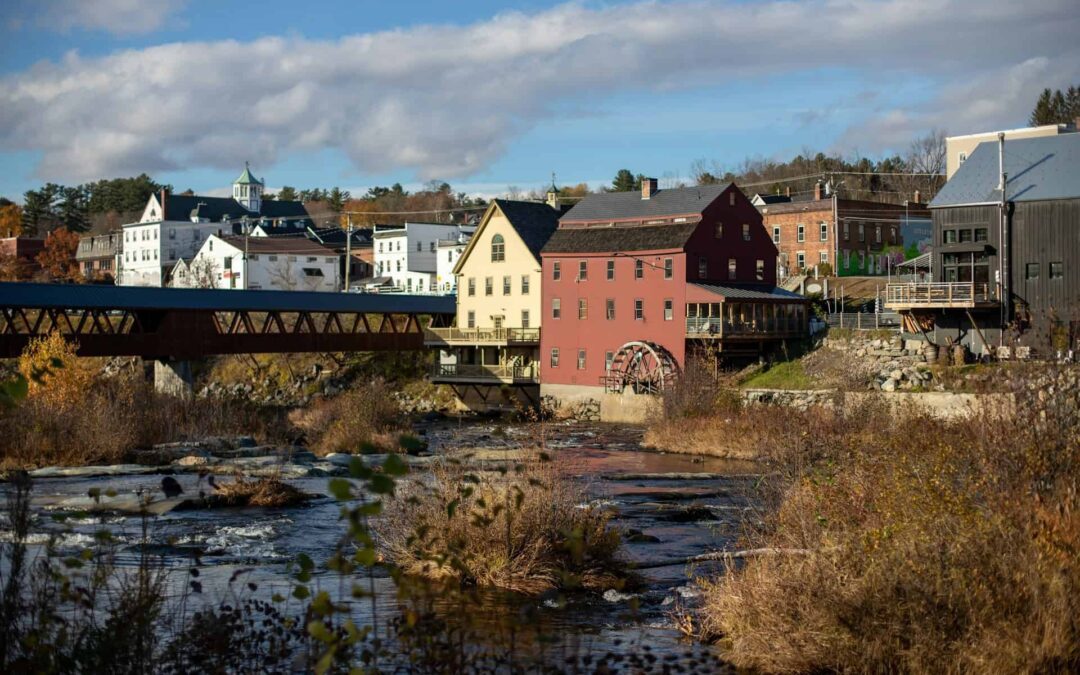
3 charming New Hampshire Towns that are straight of storybooks
From Uncle Sam’s house to covered bridges, these three New Hampshire towns have charm to spare. Anybody who has seen a Hallmark movie set in a...

8 TV shows set in New Hampshire to add to your watch list
From animated series to hit shows, several TV programs have been set in New Hampshire over the decades. Here are some of the most intriguing. For...