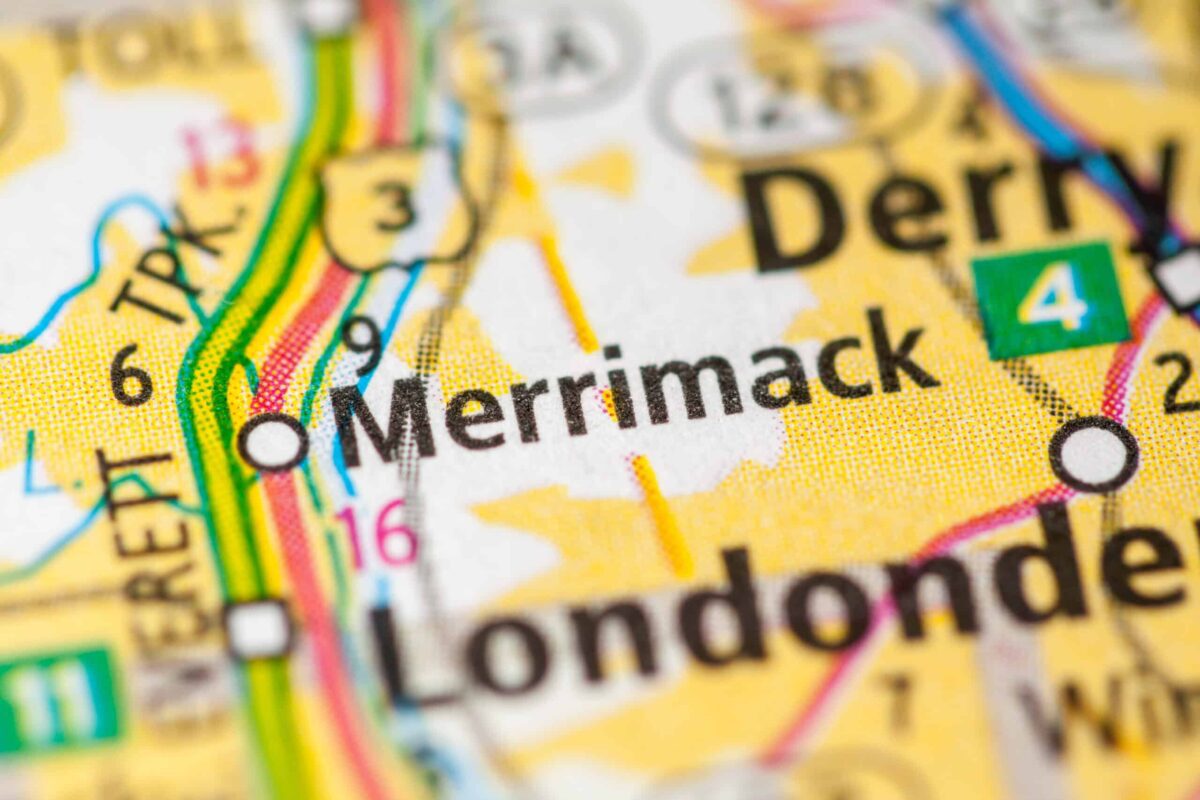
According to research, kidney cancer rates are higher in Merrimack than in other areas of the state. (SevenMaps/Shutterstock).
Research shows that kidney cancer rates are higher in Merrimack residents than others in the Granite State. Here’s what you need to know.
A recent study has shown that kidney cancer rates are higher in Merrimack residents than in those in the rest of the state. The investigation—led by Dartmouth researchers and officials from the New Hampshire Department of Health and Human Services and the New Hampshire Executive Council—indicated that additional time is needed to determine what’s causing the issue.
The announcement comes amid a long-term cancer research project that was initially prompted by Merrimack residents who were concerned about the growing number of community members who were being diagnosed with cancer. Many believed that the increase may be linked to PFAS contaminating local water supplies. PFAS, or “forever chemicals,” are toxic and man-made. They’re often used in manufacturing and can lead to environmental contamination.
Research indicates that kidney cancer rates are approximately 38% higher in Merrimack than they are anywhere else in New Hampshire, though elevated rates were also found in Manchester. One of the Dartmouth researchers working on the investigation, Megan Romano, also serves as a professor of epidemiology at the school. She indicated to NHPR that they’re looking into a variety of factors that may be contributing to the spike in kidney cancer in this specific community.
In addition to PFAS and other environmental contaminants, such as uranium, radon, and arsenic, they’re also looking into factors like physical activity, age, smoking, and how often CT scans are performed to identify this type of cancer.
The results so far
Initial studies have shown that there doesn’t appear to be higher rates of tobacco usage or CT scans in Merrimack, which, per the researcher’s statement, are “commonly associated with increased risk or detection of kidney cancer.” Though additional research is ongoing, it seems as though the increased rates of kidney cancer are most likely related to lifestyle and environmental causes.
Megan Romano stressed to NHPR that she and the Dartmouth research team are committed to determining what in Merrimack may be causing “an excess of kidney cancer.” She added that this observation, “seems to suggest that there is something going on there that is worth unpacking and trying to understand.” Merrimack residents have, so far, been willing to participate in the team’s research.
In terms of next steps, the New Hampshire Department of Health and Human services is monitoring the cancer data and is working to provide resources to residents that could potentially help with kidney cancer prevention. Additional information, insight, and statistics can be found here and here.
Author


We asked, you answered: Should New Hampshire keep its first-in-the-nation primary status?
New Hampshire has earned its reputation as the first-in-the-nation primary state thanks to a mix of law and tradition. State law requires that its...

White Mountains spot named most charming NH small town by HGTV. Do you agree?
If you're looking for a way to make snow piles seem charming again, consider taking a trip. HGTV named the most charming small towns to visit in...
How did New Hampshire get its name? Here’s how the state came to be
Have you ever wondered how the state of New Hampshire got its name? The state is one of many from the original 13 colonies to be named by European...
Judge rules NH can’t end car inspections, at least for now
Just a few days before car inspections were set to end in New Hampshire, a judge has hit the brakes. U.S. District Judge Landya McCafferty granted a...
Bulk of Smuttynose Brewing campus in Hampton poised for sale
A sale is looming for of the bulk of the Smuttynose Brewing Co. campus, ending a storied chapter in New Hampshire beer history. The adjacent...

NH economic expert sees tough job market in 2026. Here’s why.
The economy overall is in relatively good shape, but the labor market isn't, according to Brian Gottlob. Gottlob is the director...