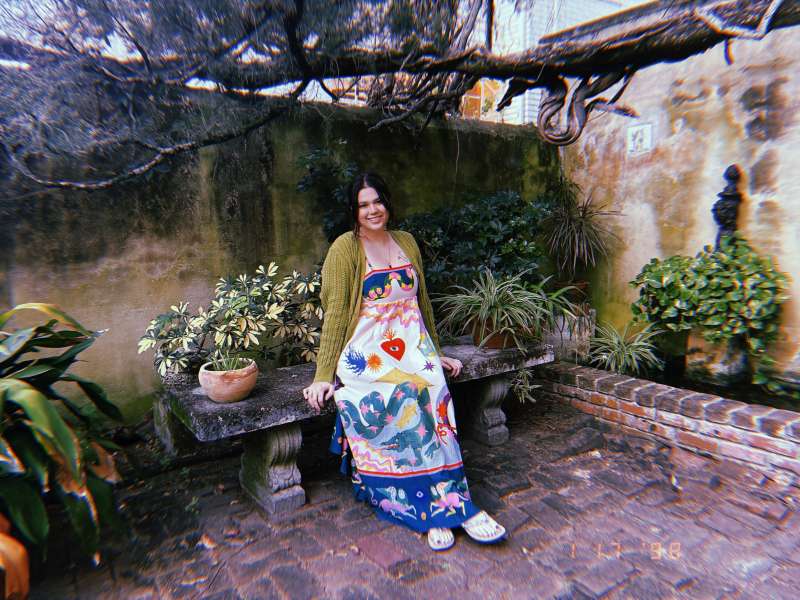
Ten days after Liv Clark launched an Instagram account for Seacoast Period Pantry, an effort to make period products, contraceptives, and other reproductive health supplies available for free throughout the Seacoast, the response started pouring in.
Businesses wanted donation boxes. Organizations wanted pantries. People she barely knew were offering to help.
“It’s growing faster than I expected,” said Clark, a Rochester resident who turns 29 this month.
The pantries will be stocked with pads, tampons, menstrual cups, period underwear, and reusable pads, along with pregnancy tests, condoms, and over-the-counter birth control. Clark also plans to offer products including Plan B, Midol, and Monistat, although what is available will vary by location.
The idea is simple: Put the supplies somewhere people can easily access them and let them take what they need, no questions asked.
A handful of organizations have reached out.
The first pantry is expected to go to the Waysmeet Center and Cornucopia Food Pantry in Durham, serving University of New Hampshire students.
Clark hopes to install it within the next few weeks.
The Portsmouth Housing Authority is interested in an outdoor pantry that would be accessible to residents. Mutual Aid Relief Fund New Hampshire is helping Clark figure out how to build it, potentially by repurposing a medicine cabinet into something resembling a Little Free Library.
Breakaway Cafe in Portsmouth, meanwhile, is interested in offering supplies on a small cart.
The pantries will all look different depending on the organization’s needs. Some are simple lockers.
“It kind of depends on the business or organization and what they’re interested in,” Clark said.
Clark didn’t invent the concept.
Before moving to Rochester with her partner about a year ago to be closer to family, Clark lived in Asheville, North Carolina. There, she became friends with a woman who operates a similar network and began volunteering to stock the pantries.
That project recently marked its second anniversary and has grown to more than 30 locations, Clark said.
The experience stuck with her.
Clark was also living in Asheville when Hurricane Helene devastated the area, an experience that reinforced for her how important community-run aid can be when people suddenly find themselves struggling to meet basic needs.
When she moved to New Hampshire, Clark began wondering whether something similar could work here.
“I was like, ‘I’m seeing a need up here,’” she said.
Clark launched the Seacoast Period Pantry social media account and began talking about the idea within communities she had joined since moving to New Hampshire. Those connections quickly multiplied.
The project has also attracted people willing to donate more than supplies. ReCreative + Co. in Portsmouth offered to build the pantry’s website and help with marketing for free.
“One of the primary pillars of what we do here at Recreative is community,” said Meg Raiano, the creative director at Recreative. “As soon as I saw the Seacoast Period Pantry in my suggested follows on instagram, I knew I’d like to help in any way I could. We (Recreative) have an initiative called ‘recreative good’ where we provide services—either for free or discounted—to organizations throughout the Seacoast who are doing good work for their community, and Seacoast Period Pantry is a clear community-driven organization, built to help anyone in need of period products (and more) throughout the Seacoast.”
‘It’s not just women that bleed’
Clark deliberately doesn’t want the pantries to look like many of the period-product projects she has seen elsewhere.
Instead of the pink and red color schemes commonly associated with menstruation, she chose green, purple, and beige.
Her partner is a transgender man, Clark said, and she wanted the project to reflect the fact that menstruation isn’t something experienced only by women.
That thinking also shapes her larger vision for the project.
Clark said she would eventually like to see free period products available in bathrooms throughout schools, colleges, and other community spaces—places where someone who needs a tampon or pad doesn’t have to ask for one, find money for a dispenser, or simply go without.
She remembers being a student herself and seeing tampons locked in dispensers on bathroom walls.
“College kids can’t afford anything,” she said. “You should not be having to worry about that.”
For Clark, access to period products is a basic need.
“It happens to so many people, more than half the population—and you shouldn’t have to be spending money on that because it’s something your body naturally does,” she said.
The work also draws on Clark’s professional background. Before becoming a paralegal in family law in New Hampshire, she spent more than six years in social work, including working with unhoused people and children in the juvenile justice system.
Social work eventually became emotionally taxing, she said, and moving into law gave her room to put that energy somewhere else.
“Now I have the capacity to do something I’m passionate about,” Clark said.