The Seacoast businessman whose data center proposal ignited a firestorm in Nottingham last month is a past campaign donor to Gov. Kelly Ayotte, federal campaign finance records show.
Thomas Moulton gave $1,000 to Friends of Kelly Ayotte, Ayotte’s US Senate campaign committee, on Oct. 20, 2010, according to a Federal Election Commission filing.
The filing lists a Hampton post office box and identifies Moulton as chairman of Sleepnet, a Hampton-based company. Moulton is the president and CEO of Sleepnet Corporation, a Hampton manufacturer of masks for sleep-disordered breathing.
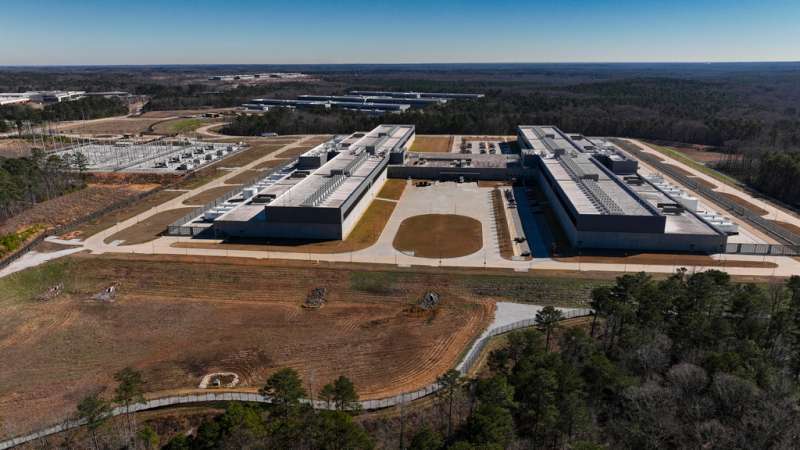
Moulton proposed a data center on a roughly 150-acre property he owns off Route 4 at the Nottingham Business Park, telling InDepthNH he was exploring the project with no tech tenant lined up. “The reality is we’re gonna need these places for the future. If not New Hampshire, where?” Moulton told the outlet.
News of the donation re-surfaced at a time when the governor’s party is clearing the way for data centers in New Hampshire, and Granite Staters are revolting against them.
Democratic lawmakers introduced Senate Bill 439 earlier this year to create a statewide definition of data centers and give cities and towns the authority to regulate them.
Republicans flipped the bill on its head—first through a Senate committee amendment from Sen. Timothy Lang, then through a House amendment from Reps. Diane Pauer and Keith Ammon that would have prevented towns from enacting any data center-specific regulations and made the facilities a permitted land use “by right” in commercial and industrial zones. The House tabled the gutted bill 304-11 on May 14, killing it for the session—and leaving towns with no state enabling authority to regulate data centers at all.
Ayotte, meanwhile, signed HB 672 into law last year, creating a category of “off-grid electricity providers” that supporters say will make New Hampshire more attractive to data centers by letting them install their own power sources outside the regulated grid.
The proposal for the center collapsed within days of becoming public. An online petition opposing the project gathered more than 20,000 signatures, and Moulton withdrew his application hours before a May 27 planning board meeting that had been moved to the elementary school gym to accommodate the expected crowd. He withdrew without prejudice—meaning he can bring the proposal back.
Activists in Nottingham aren’t taking that chance. At a packed special meeting last week, the town’s planning board announced its intention to impose a 12-month moratorium on data center construction. But towns are largely on their own—New Hampshire has no statewide data center regulations, and a Democratic-led effort to give municipalities zoning authority over the facilities, SB 439, was gutted in the amendment process and tabled this year.
Democratic gubernatorial candidate Cinde Warmington went to Nottingham to call for a statewide moratorium on data center siting.
“We need to make sure that we have looked carefully at all of the impacts of these data centers before we make any decisions and that is why I am calling for a statewide moratorium while this issue is studied and so that all of you can be protected,” Warmington said.
Ayotte has voiced opposition to large data centers, telling WMUR’s “Close Up” they could “skyrocket energy costs,” and her campaign says she opposed the House GOP “by right” amendment.
But Ayotte has not called for a moratorium or thrown her support behind any specific legislative action that would stop or slow a motivated developer from building a data center in the state — and with no statewide guardrails in place, nothing stops Moulton or anyone else from bringing another proposal to another New Hampshire town.