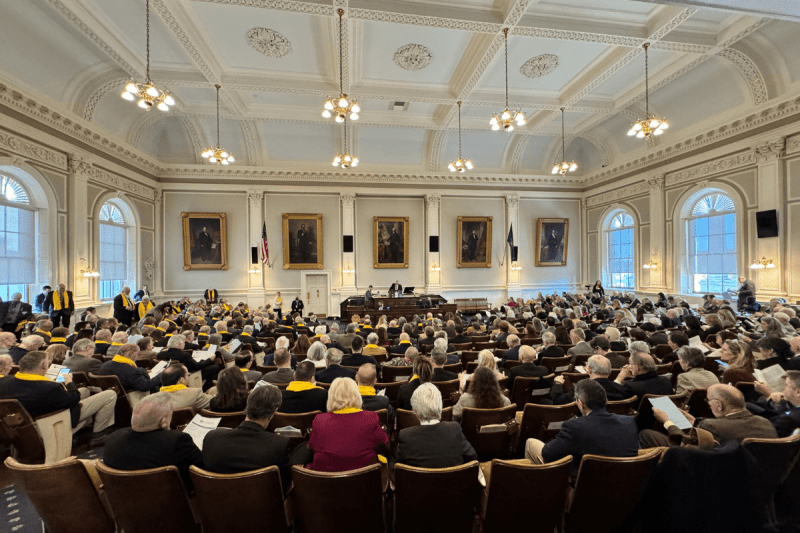
Republicans in the New Hampshire House of Representatives on Thursday voted on a sweeping expansion of their school voucher program, a move that could triple the cost of the program.
The bill would expand eligibility for the program from families earning 350% of the federal poverty line to those earning 500% of the guidelines — up from $109,500 for a family of four to $156,000.
Democrats wasted no time slamming the bill, which is among the most expansive programs in the country of its kind, saying the program is already without guardrails for spending or student performance, and were quick to point out largely utilized by those who have previously attended private and religious schools.
“The fact is that most of these students weren’t seeking freedom from their public schools. They were already attending private schools… New Hampshire taxpayers can’t afford this,” Rep. Dave Luneau, the deputy ranking Democrat of the House Education Committee, said on the floor while debating the bill.
Despite the enormous potential cost of expanding the program, Republican Rep. Ken Weyler took the rare step of waiving referral of the bill to the Finance Committee, where he serves as Chair, which means there will be no review of the fiscal impact on the state budget, despite the bill adding as much as $66 million to the program annually, according to some estimates.
House Democrats said this was an attempt to cover up any study of the program’s cost.
“Republicans are clearly scared that public opposition to the school voucher program will grow even stronger if the financial impact to taxpayers becomes known. Every year since the voucher program was established, it has run millions of dollars over budget. To date, the vast majority of applicants have been students who were already attending private school at no cost to taxpayers,” Rep. Mel Myler, ranking Democrat on the House Education Committee, said in a statement following the vote.
RELATED: Op-ed: Liberty in the Library
The voucher program has been routinely criticized for largely serving students already enrolled in private schools, allowing taxpayer money to flow into private and religious schools in the state that were previously paid for out of pocket, schools which are often able to pick and choose students on the basis of sex, disability, or sexual preference. Democrats said this expansion would increase the number of wealthy families using taxpayer funds for programs they can afford themselves.
Similar programs in other states have met bipartisan resistance by lawmakers and the public due to ballooning costs and the fact that they largely benefit families whose children already attend private schools. The Texas legislature recently rejected a similar program based on cost concerns.
Because of the flexibility in how these vouchers can be used, these taxpayer funds often go directly to retail purchases. Currently, Amazon is among the largest beneficiaries of taxpayer education funds in New Hampshire because of this program.
Questions have also been raised about conflicts of interest around lawmakers proposing and voting on legislation related to this program. House Majority Leader Jason Osborne’s family was reported to have received $28,750 from the program in 2022.
Rep. Osborne attacked Democrats for opposing the bill, calling New Hampshire public schools a “failing system”.
The bill now goes to the State Senate for a vote.