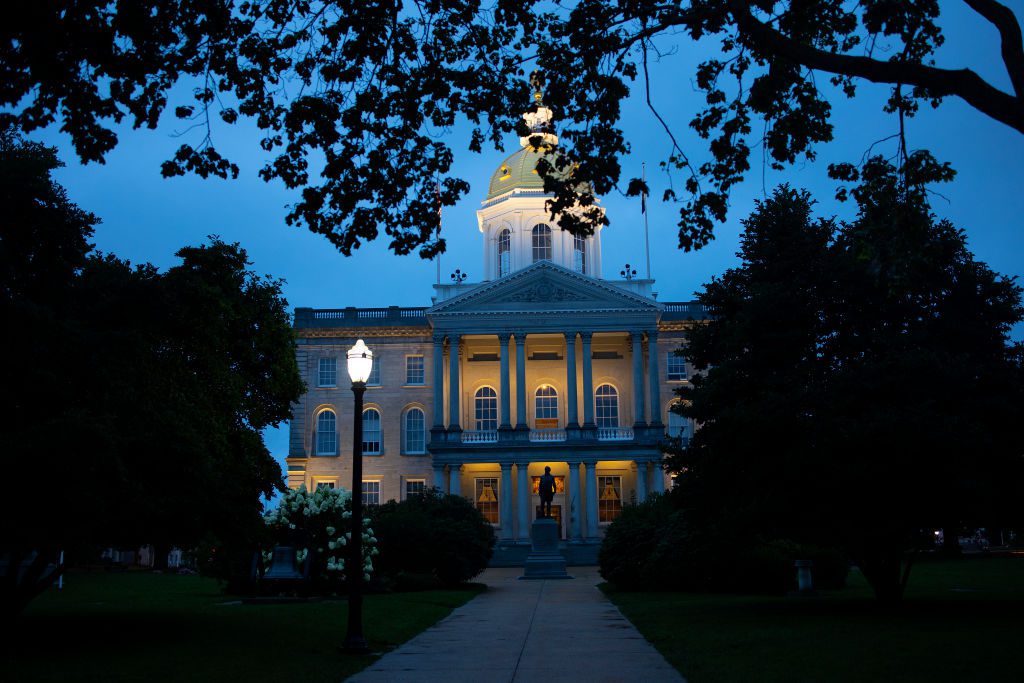
(Photo by Andrew Lichtenstein/Corbis via Getty Images)
As 2025 ended, many Granite Staters felt the same things. Groceries cost more. Housing costs and property taxes are up. Health care is harder to afford and access. Too many of our neighbors feel it is a challenge to survive, let alone thrive. It’s easy to blame inflation or say, “That’s just how things are now.”
Part of the reason life feels harder is public policy. Decisions made this year in our State House and Washington, DC, have affected family budgets, health care, and economic security and will continue to in 2026 and beyond.
Looking back at 2025, three decisions stand out.
A Tighter State Budget Means Fewer Services When Families Need Them
First, with less money coming in for this current budget, policymakers cut funding across multiple programs.
Imagine a family that sees their paycheck cut but still has to cover the same bills. Something has to give. That is how policymakers started 2025, entering the year with less state tax revenue due to their own past policy decisions.
Over the last several years, the state cut its two business taxes and repealed the 102-year-old Interest and Dividends Tax, which mainly affected households with significant non-retirement account investment income. Together, these choices reduced state revenue by an estimated $500 to $800 million during the current budget cycle. While some said cutting business taxes would actually improve revenues, New Hampshire fell behind neighboring Vermont and Maine in business tax revenue growth (our largest state tax source). While Vermont and Maine grew by about 166%, New Hampshire only grew 124%.
Policymakers can use the State Budget to invest in public health, education, mental health care, housing, child care, and job training to improve the lives of our residents. But in the 2025, this lagging revenue meant fewer resources were allocated for mental health care, housing supports, and other services families depend on. At the same time, while state taxes have been cut for profitable corporations and wealthy investors, local property taxes continue to increase, driving up costs for our hardworking Granite State neighbors.
For many Granite Staters, the result is simple: higher bills at home and fewer support from the state when times get tough.
Federal Changes Shift Costs and Add Risks to States and Families
Just days after New Hampshire passed its State Budget, Congress approved a major federal law, the “One Big Beautiful Bill Act.” This law made permanent many of the tax cuts passed in 2017. About two-thirds of those benefits go to the top 20% of earners. But the same law also made changes to assistance programs that could hurt New Hampshire families and strain the State Budget.
Limits on a key Medicaid funding tool could soon cost New Hampshire hundreds of millions of dollars each year. That money helps support hospitals and health care access statewide. New paperwork requirements could cause about 20,000 Granite Staters to lose Medicaid, risking coverage for hard-working Granite Staters. Food assistance is also at risk. The food stamp program helps about 76,000 people in New Hampshire afford groceries. Under new rules, the program will cost the state more to run and could penalize people who have trouble meeting new requirements. When people lose health care or food assistance, the impact doesn’t stop with them. Hospitals, local businesses, and communities feel it.
Rising Health Insurance Costs Could Push Coverage Out of Reach
Decisions made in Washington in 2025 could make health care coverage much more expensive for many Granite Staters.
Picture a working adult who finally found health insurance they can afford. That coverage may soon cost much more. At the end of 2025, expanded tax credits that help people pay for health insurance through the Affordable Care Act marketplace are set to expire unless Congress acts. Without those credits, average premiums in New Hampshire could rise by about 60% . A 60-year-old couple earning $85,000 a year could pay 170% more, seeing their premium jump from $602 to $1,624 each month to keep the same coverage. When insurance becomes too expensive, people delay doctor visits, skip prescriptions, or lose coverage altogether. That harms families and puts pressure on hospitals and the broader economy.
2025’s Policy Choices Could Have Major Impacts on NH’s Affordability in Years to Come
These decisions share a common result: life is becoming less affordable and more uncertain for many Granite State families. A lack of State Budget investments, major federal changes, and rising health care costs will impact daily life in New Hampshire in 2026 and beyond.
Public policy choices in our national and state capitals shape health care access, core public services, and economic growth that could be made to work for everyone, not just those at the top. Thoughtful, data-driven decisions can help prevent today’s policy choices from becoming tomorrow’s avoidable crises.
Author


John E. Sununu launches NH campaign for US Senate seat, seeks Trump meeting
His entry comes as Republicans fear another federal election loss as Democrats hold strong polling advantage. Former US Sen. John E. Sununu (R-NH)...
Dems to infuse cash into New Hampshire elections
The Democratic National Committee (DNC) announced a cash investment to boost the party’s early organizing ahead of 2025 municipal contests and the...

How a federal shutdown would hit New Hampshire
Social Security and VA continue, but SBA loans, USDA housing, and national-forest services could stall. Pappas’s plan would protect military pay,...
‘Sick to my stomach’: Trump distorts facts on autism, tylenol, and vaccines, scientists say
By Amy Maxmen Originally published September 22, 2025 Ann Bauer, a researcher who studies Tylenol and autism, felt queasy with anxiety in the weeks...

Conservative activist Charlie Kirk dies after being shot at Utah college event
OREM, Utah (AP) — Charlie Kirk, a conservative activist and close ally of President Donald Trump, was shot and killed Wednesday at a Utah college...

VIDEO: Maine Governor Defies Trump While Ayotte Does Nothing
Governor of Maine Janet Mills made major headlines for standing up to Donald Trump at the White House for his attacks on transgender youth across...