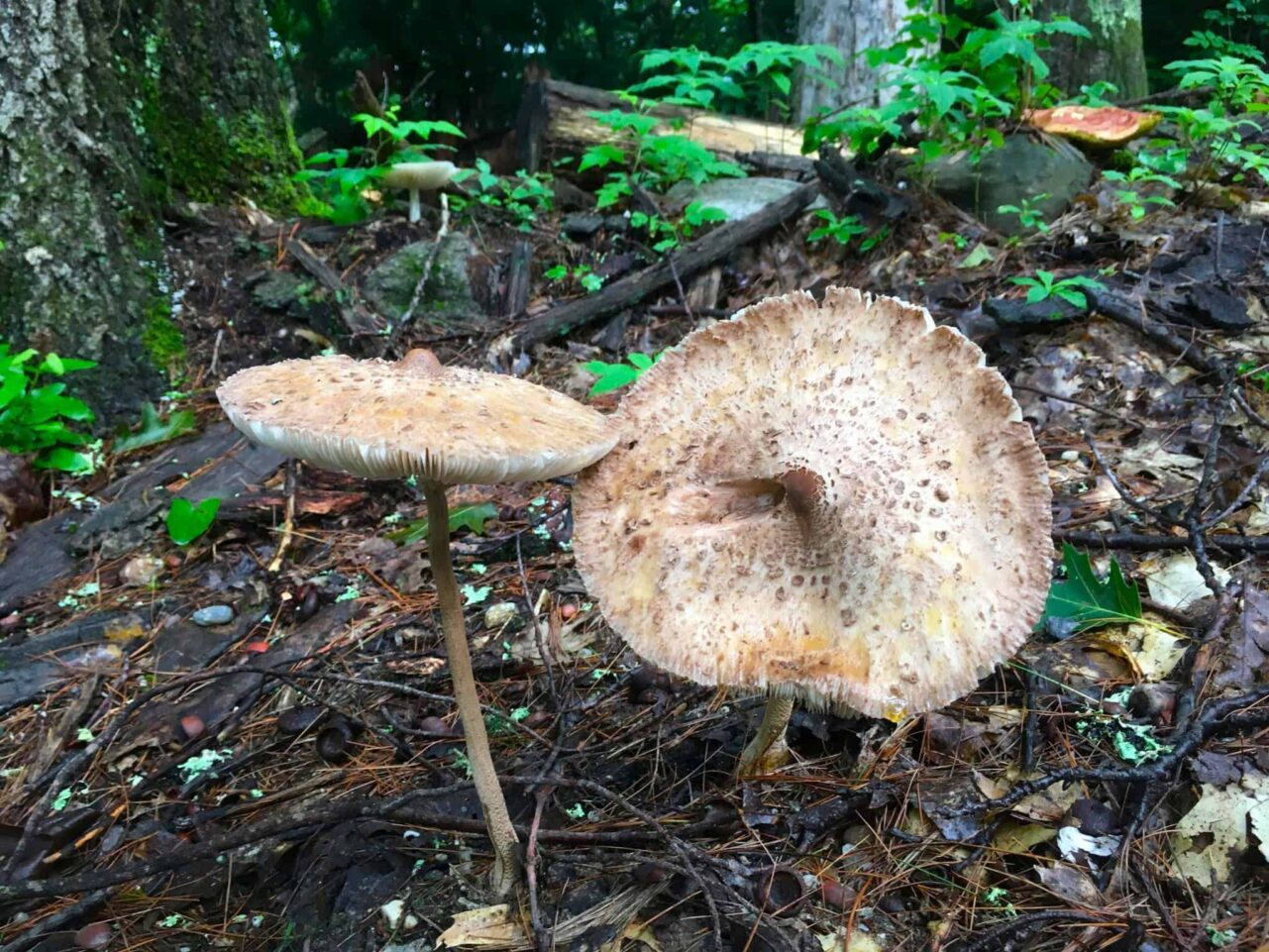
Wild mushroom foraging is hugely popular in New Hampshire, but it’s best to educate yourself on what’s safe and not safe to harvest. (Stacy Milbouer)
From strawberries to sea lettuce, more and more New Hampshire residents are foraging for wild edibles and fun.
It’s not skiing, it’s not pickleball, and it’s nothing new. In fact, it’s a practice that goes back thousands of years. Still, more and more Granite Staters are heading outdoors to search for wild, edible food beyond their backyard gardens.
So why has foraging become so popular here? We live in a state with acres of lush woodlands, wetlands, and a fecund seacoast—which, for many, was rediscovered during the COVID lockdown. All of these locations are perfect for foraging.
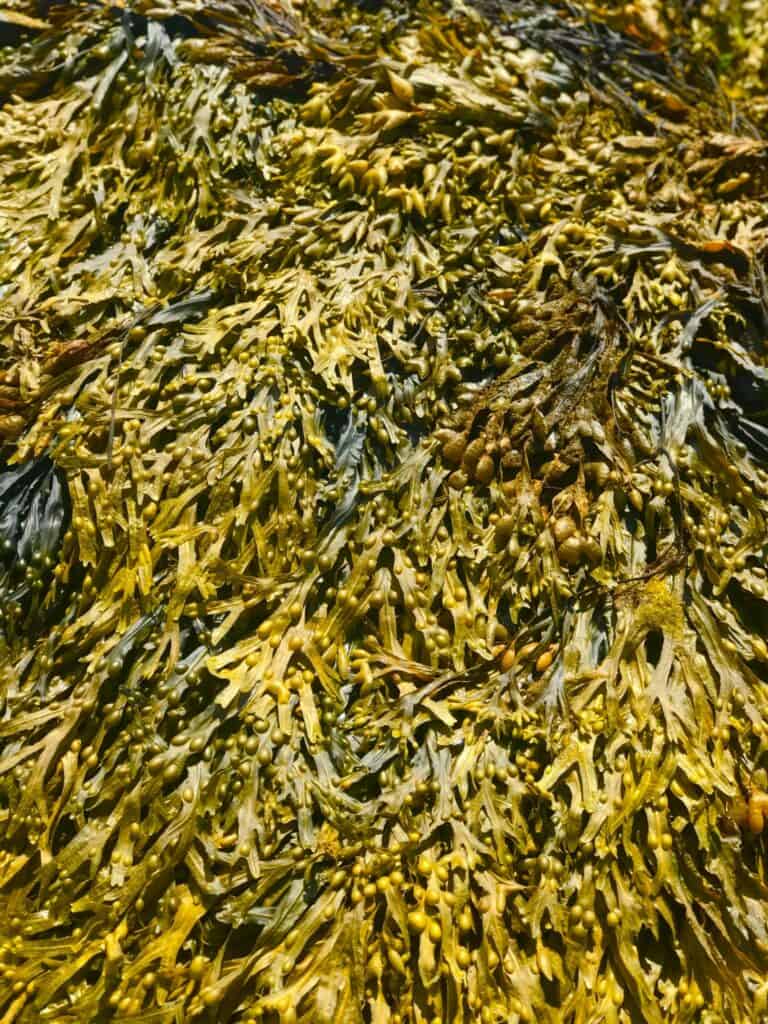
Locally foraged wild mushrooms, berries, greens, nuts, seaweed, and shellfish have increasingly appeared on locavore restaurant menus and in social media posts. And there is no shortage of foraging classes and meet-up groups in the state.
“It’s definitely a rage,” said Russ Cohen, who has been foraging and teaching foraging in New Hampshire and Massachusetts for the past 40 years. Cohen’s 2004 book, “Wild Plants I Have Known…and Eaten,” which lists 40 species of wild edibles in New England and how to harvest and prepare them for eating, is now in its ninth printing.
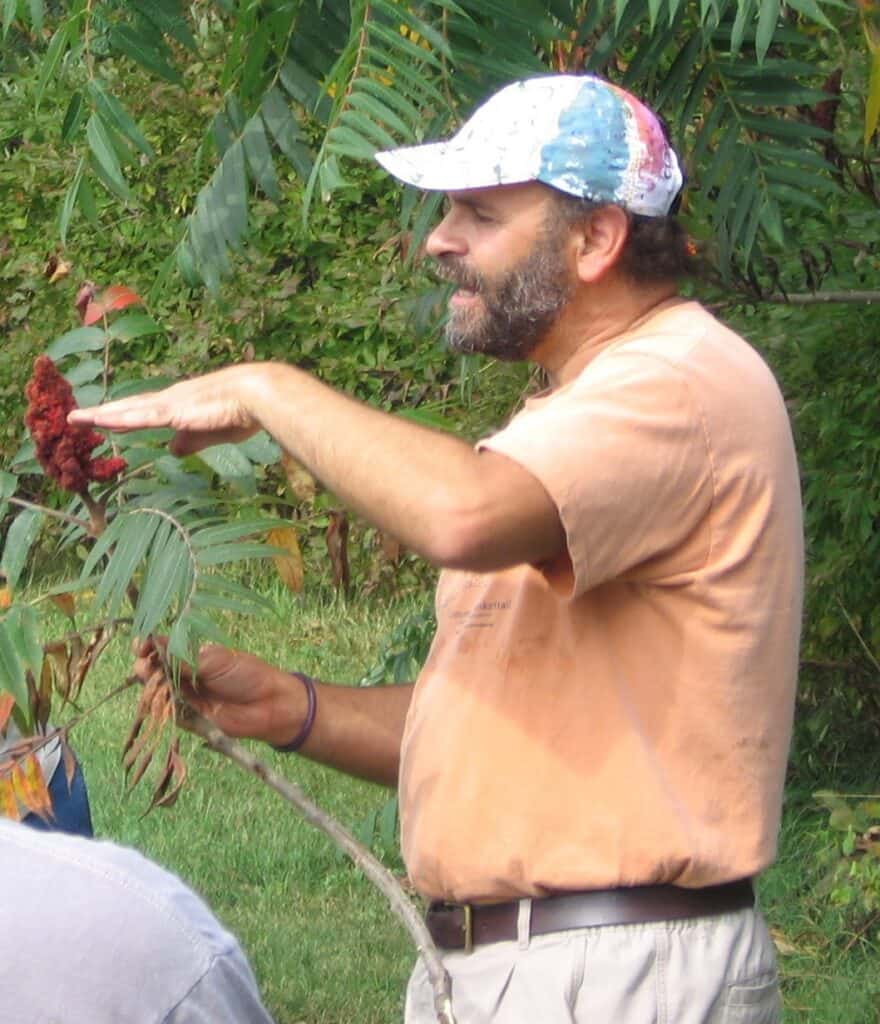
“More books have come out about foraging since my book first came out 22 years ago than there have been since the history of foraging. It’s because more and more people want to connect directly with food. These are the same people who have put beehives and chicken coops in their backyards.”
And those people in New Hampshire have found each other—especially on social media.
The NH Wildcraft and Foraging public group’s nearly 4,000 Facebook members share local foraging articles, recipes, experiences, and photographs.
The New Hampshire Mycological Society, which, according to its website, aims to “foster knowledge, awareness, and enthusiasm for fungi” through science, exploration, and education, has over 2,000 members on its Facebook page. The society also offers lectures, workshops, and events “for those who love to search for mushrooms—especially in New Hampshire.”
Another fungi foraging group, NH Mushroom Hunters, is a public site for “people who love to search for mushrooms, especially in New Hampshire, ” and it has nearly 14,000 members.
Foraging is all about the seasons,” said Cohen. “We’re spoiled. We can go to a grocery store and buy the produce and food we want year-round. Early inhabitants knew there was a finite period during which they could gather fresh food in the wild. I have noticed that because of climate change, some of these growing seasons are coming earlier.”
While each New Hampshire season offers something different to forage—Japanese Knotwood, berries, and shellfish in the summer, mushrooms, mid-summer through fall, nuts in the fall—black and yellow birch twig inner bark (which has a wintergreen flavor) grows all year round.
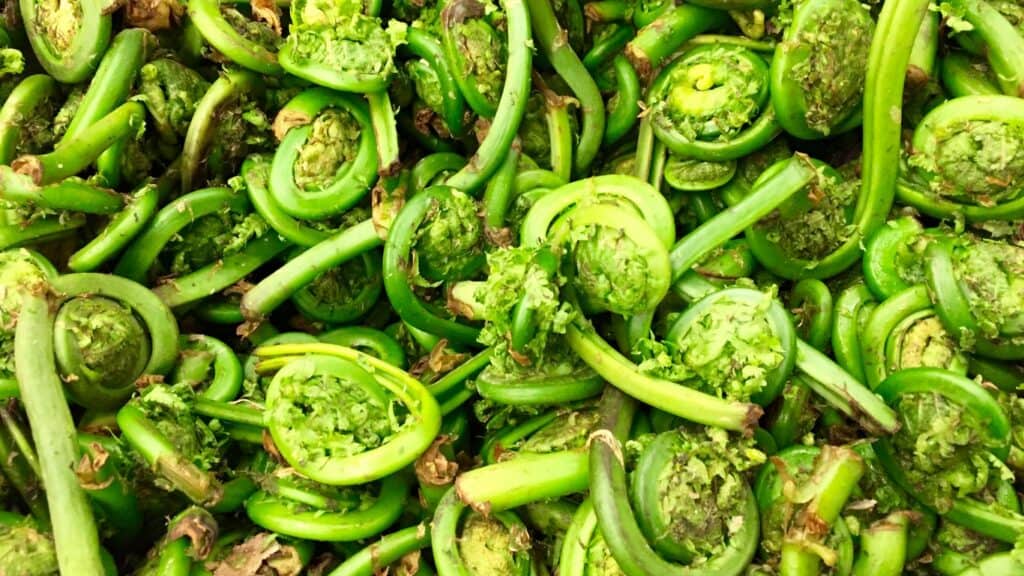
In New Hampshire this time of year, foragers are likely to come across stinging nettles, marsh marigolds (which taste like spinach), Japanese knotweed, dandelions, and the popular fiddlehead. Cohen says the only kind of fiddlehead he recommends is the ostrich fern fiddlehead, which grows along the Merrimack and Connecticut Rivers. Cohen says the best way to cook these delicate plants, which he says tastes like asparagus “but better,” is the sweet corn way, straight from the field to a boiling pot. Never, ever eat raw fiddleheads; they can cause severe abdominal sickness.
Preparation is key, said Cohen.
When it comes to foraging for wild edibles, especially mushrooms, learning what to look for and what to consume is probably a good idea before heading out with your foraging basket and sunscreen. Thankfully, there’s plenty of opportunity for education in the state.
The New Hampshire Outdoor Learning Center in Wolfeboro is offering a class on identifying “Wild Edible and Medicinal Plants of New England” on Jun. 6 ($195). After a day of guided foraging and harvesting, participants learn how to cook and serve their harvest.
In the fall, the center offers “Wild Edible Mushrooms” classes ($195), one-day workshops presented by a professor of mycology to identify 20 species of mushrooms that are safe to eat, designed to give foragers “confidence…to forage safely and enjoy a feast that can only be found in the wild.”
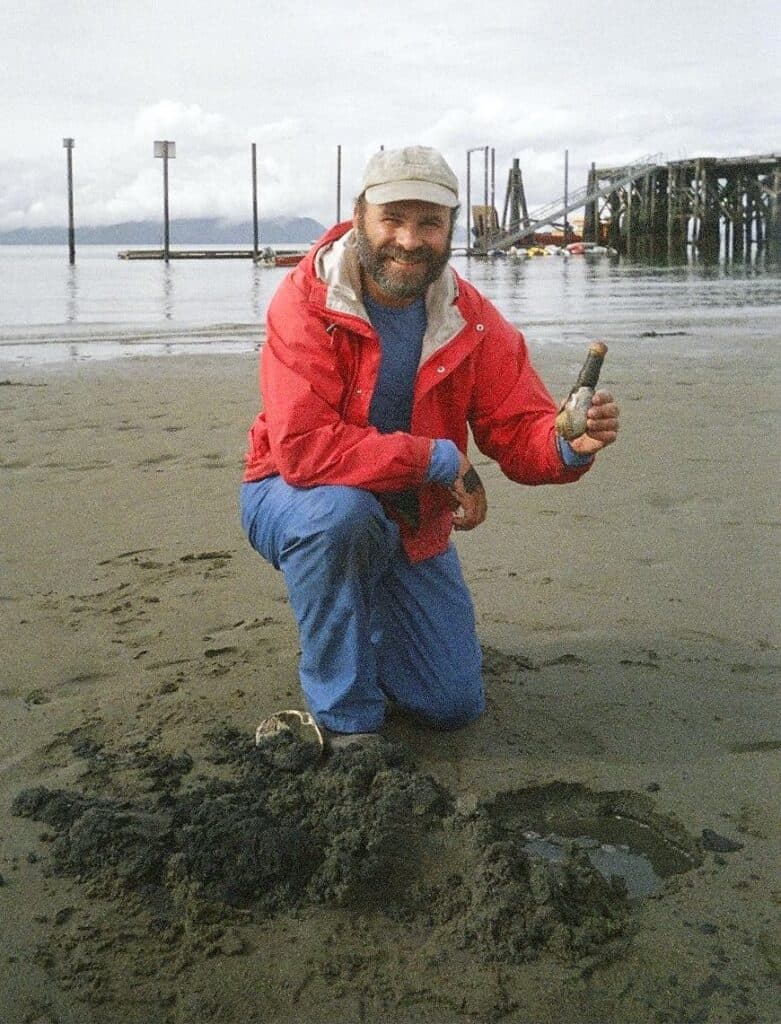
Russ Cohen lists his free 2026 “Edible Wild Plant/Mushroom Walks and Talks” in New Hampshire and Massachusetts on eatwild-ne.org, including Jul. 16 and 18 presentations at the Hanover Conservancy in Hanover.
Beaver Brook Association in Hollis occasionally offers expert-guided foraging workshops throughout the year.
The New Hampshire Mushroom Company in Tamworth lists ongoing classes in Mushroom Identification ($40), Saturday Night Forage ($20), Food and Forage ($20), Cooking with Mushrooms ($40), and Private Mushroom Experiences ($250).
In addition to classes, there are plenty of books, tutorials, and apps devoted to foraging. Cohen lists a bibliography of foraging books on his site, and the University of New Hampshire Extension has a free online “Foraged Mushrooms Safety and Quality” guide. And Tanglewood Hollow, a nature-inspired educational community in Concord, has an informational section on its website called “Foraging with Kids.”
Cohen reminds would-be foragers that indigenous people first began foraging in this region 12,000 years ago, but were careful not to overharvest or damage the crop or the environment. That’s a message he likes to put across to those whom he teaches today.
“Only take enough for one meal at a time,” he said. “Overharvesting some of these plants, like fiddleheads, can destroy future growth. Foragers need to be aware of their impact on the environment.”
This article first appeared on Good Info News Wire and is republished here under a Creative Commons license.
Related: Looking for farm-fresh eggs in NH? Here’s where to go
Author

Exeter Inn taken over by luxury hotel group. Here’s what is planned.
A Connecticut‑based luxury hospitality company is expanding into New Hampshire, taking over the 57‑year lease of the historic Exeter Inn. Greenwich...
NH raises red flags on Dover’s Willand Pond milfoil removal plan
New Hampshire Department of Environmental Services officials have stated the agency likely will not issue a permit for mechanical removal of milfoil...

Democrats gain ground in NH, new Saint Anselm poll shows
Democrats are gaining ground ahead of the 2026 midterms, a new poll from Saint Anselm College Survey Center revealed. The poll, released March 23,...

Who are New Hampshire’s billionaires? Forbes releases new list
Forbes has released their annual billionaires list. For their 2026 list of the richest people in the world, the business magazine saw...
Thousands more are moving into New Hampshire from other states than leaving
More people moved into New Hampshire than left from 2024 to 2025, with the state ranking 22nd in the nation for net domestic migration gain,...
Ayotte calls for higher penalties for refusing breath alcohol test
The price you pay for refusing a Breathalyzer in New Hampshire could double under a bill supported by New Hampshire Gov. Kelly Ayotte. In a press...