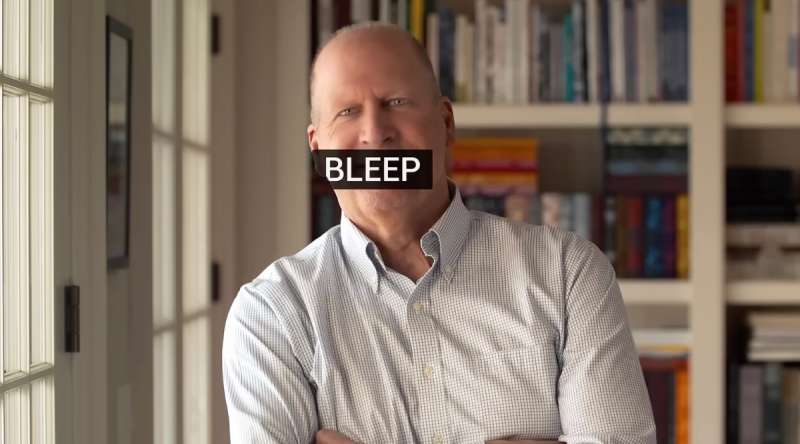
John E. Sununu sat on BlueRiver Acquisition Corp.’s board as the company stopped reporting its finances to the federal government. His campaign’s story about when he left can’t be confirmed.
In March 2025, a company with John E. Sununu on its board of directors told the federal government it couldn’t file its annual report on time and expected to file it within 15 days. More than 18 months later, that report still hasn’t been filed.
That company, BlueRiver Acquisition Corp., did nothing.
It was a “blank check” company, a company made with no specific business plan. It was built only to raise money from investors and then use it to buy another private business.
However, nearly four years after it was formed, BlueRiver’s last financial report said it still “had not commenced any operations” and the only deal it ever announced collapsed.
In that last report, BlueRiver had $6,035 in cash of its own and owed more than $8 million. It hasn’t filed a financial report with the Securities and Exchange Commission (SEC), the federal agency that polices the stock market, since November 2024, and it stopped filing anything at all with the SEC after July 2025.
Sununu, the Republican nominee for U.S. Senate in New Hampshire, sat on BlueRiver’s board as it fell apart. His campaign says he left on Nov. 4, 2025.
No BlueRiver or SEC record confirms that date, and the campaign’s description of the company was more than two years out of date.
Sununu also left BlueRiver off the financial disclosure he filed as a Senate candidate in February, WMUR reported in May. His campaign then amended it after a lawyer long involved in Democratic politics asked the US Department of Justice to investigate the omission.
Why does this matter in the Senate race?
Sununu faces Democratic US Rep. Chris Pappas (D-Manchester) on Nov. 3 for the seat Sen. Jeanne Shaheen (D) is leaving after three terms.
Accusations that Sununu used his years in Washington to enrich himself have dogged his campaign from day one. When he entered the race in October 2025, New Hampshire Democratic Party Chair Ray Buckley said Sununu “went to Washington almost thirty years ago, then cashed in, making millions selling out to corporations and working for Big Oil, Big Pharma, and Wall Street while the people of New Hampshire paid the price.”
Last month, a Democratic super PAC’s first attack ad against him said that after losing his Senate seat in 2008, Sununu “went straight to work for one of the biggest lobbying firms in the country.”
BlueRiver is yet another controversial venture that traces back to his time in government.
The company told investors Sununu was qualified for its board “due to his experience in government and corporate leadership” and that he “provides important insights on government relations, public policy and business matters relevant to us.”
Boston Scientific, which paid Sununu $444,354 as a director, has used nearly the same words to describe him to its shareholders every year from 2010 through 2025.
What is BlueRiver?
BlueRiver is what Wall Street calls a SPAC, short for “special purpose acquisition company.” A SPAC has no business of its own. It raises money from investors, then gets a limited window to find a private company to merge with.
Run out of San Antonio and incorporated in the Cayman Islands, BlueRiver raised $287.5 million when it went public in February 2021. It told investors it planned to go after a tech, media, telecommunications or entertainment company worth $1 billion to $3 billion or more.
Sununu joined as a director in January 2021. Like BlueRiver’s other outside directors, he received 30,000 “founder shares” from the insiders who created the company. Those shares convert into regular stock automatically when a merger closes. If a deal never happens, they get nothing from the money set aside for investors.
What went wrong?
In July 2023, BlueRiver agreed to merge with Spinal Stabilization Technologies, a medical device company valued at $240 million in the proposed deal. Investment firms that BlueRiver co-chief executive Randall Mays helped manage owned about 13% of the medical device company, according to BlueRiver’s merger filing.
By the time that filing came out in October 2023, investors had already cashed out about 93% of the shares BlueRiver sold to the public. SPAC shareholders can take their money back before a deal closes.
The merger never happened. Spinal Stabilization Technologies called it off in June 2024. NYSE American, the stock exchange where BlueRiver traded, had already moved to delist it that February for failing to complete a merger within three years of going public. BlueRiver appealed, then dropped the appeal, and the exchange kicked it off on July 15, 2024.
BlueRiver’s last financial report, for the period ending Sept. 30, 2024, showed $6,035 in cash of its own, separate from money held for investors, and $8.17 million owed. That included about $6.4 million in unpaid bills and expenses and $1.5 million in loans from BlueRiver’s sponsor, a company controlled by its two co-chief executives.
At the end of March 2025, BlueRiver told the SEC its annual report would be late. SEC rules require at least a majority of a company’s directors to sign that report, and BlueRiver has never filed it.
Why was BlueRiver still alive in 2025?
In July 2025, with Sununu still listed among its directors and holding his 30,000 shares, BlueRiver asked shareholders for up to another year to find a deal, extending its deadline to Aug. 2, 2026.
Insiders controlled nearly 99% of the shares. The extension passed 7,897,872 to 4.
At the time, BlueRiver was holding about $1.06 million for outside investors who hadn’t cashed out, roughly $11.59 for each of their 91,763 shares.
That final deadline passed on Aug. 2. BlueRiver hasn’t filed anything with the SEC since July 24, 2025, so nothing it has filed shows whether those investors got their money back.
What does Sununu’s campaign say?
“Senator Sununu left the board of BlueRiver, a New York Stock Exchange company, on Nov. 4, 2025,” campaign spokesman Mike Schrimpf said, according to WMUR. “He earned no salary or income.”
Schrimpf also said Sununu’s shares “carried no value and were rescinded upon his departure,” adding, “Therefore, there is no income or asset to report.”
BlueRiver moved its listing from the New York Stock Exchange to NYSE American in March 2023, more than two and a half years before the date the campaign gave for Sununu’s exit. NYSE American delisted it in July 2024.
BlueRiver never filed a notice with the SEC that Sununu had left. Sununu’s only SEC ownership filing about BlueRiver is the January 2021 report of his 30,000 shares.
BlueRiver’s website still listed Sununu as a director in March 2026, four months after the date his campaign says he left. An archived copy from June 11, 2026 no longer lists him.
His amended Senate disclosure lists the BlueRiver board seat from January 2021 to November 2025 but doesn’t list the shares.
What else has Granite Post found in Sununu’s finances?
Sununu’s campaign biography highlights his time as chairman of the board of the Waterville Valley Resort, his family’s ski resort. Granite Post reported this month that taxpayers have spent $28 million on the family’s Waterville Valley development.
The February disclosure that left off BlueRiver shows more than $1.1 million a year in outside income, including $220,000 as nonexecutive chairman of Lloyd’s America Inc., Granite Post reported in May.
A Granite Post video that month found his comeback bid was backed by more than $239,000 in campaign contributions from lobbyists in the drug, tech, oil and gas, and insurance industries. In April, Granite Post found his stakes in PepsiCo, Coca-Cola and Walmart could have gained nearly $50,000 in value as grocery costs soared.